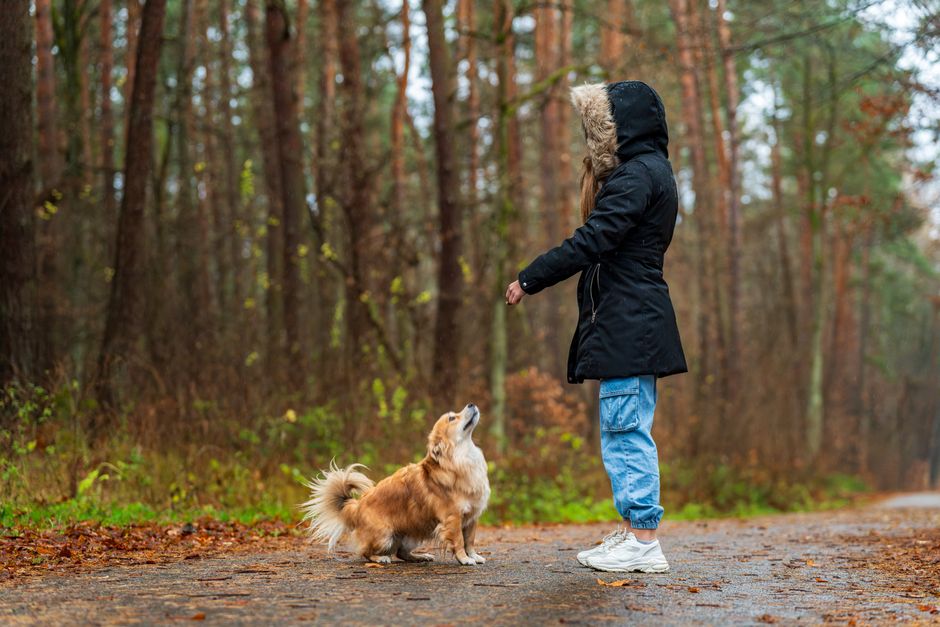
"You can't teach an old dog new tricks" is one of the most persistent myths in dog ownership, and it's simply wrong. Dogs of any age learn through the same basic process of associating a behavior with a consequence. What genuinely changes with an adult dog is not their capacity to learn, but the context around that learning: years of existing habits, a fixed sense of what's rewarding, and sometimes an unknown history that shapes how they react to new situations. Training an adult dog well means working with that context instead of against it.
Existing Habits Are Already Rewarded
A puppy is a mostly blank slate. An adult dog has had months or years of practice getting what they want by doing things a certain way — jumping on guests because it gets attention, pulling on leash because it gets them to the smell faster, barking at the door because it's always worked to move people along. These habits are deeply reinforced, which means a new, incompatible behavior has to become more rewarding than the old one before it reliably wins. This is less about the dog being "stubborn" and more about simple math: whichever behavior has paid off more consistently is the one that shows up under pressure.
Changing the reinforcement, not just the cue
Rather than only teaching a new cue, effective adult-dog training usually removes the reward for the old behavior at the same time. If jumping no longer gets attention (because the owner turns away) and a calm sit does get attention, the new pattern becomes the better bet. Cue words matter far less than which behavior actually gets paid.
Motivation Looks Different Than It Did as a Puppy
Adult dogs are often less food-driven out of sheer novelty and more selective about what they consider worth working for. Figuring out an individual dog's strongest motivators — a specific treat, a tug toy, access to sniffing, praise, or play — tends to matter more in adult training than in puppy training, where almost anything novel will do. It's also common for adult dogs, especially those adopted as adults, to need a period of relationship-building before training sessions click, since trust affects how willing a dog is to try new behavior around a person they don't know well yet.
Unknown History Changes the Starting Point
If an adult dog came from a shelter, rescue, or previous home, their history with training is often unclear. Some adult dogs arrive with solid foundations and just need the household's specific cues; others may have gaps, or may have learned that certain training tools or hand movements predict something unpleasant. Reading body language and starting with very easy, generously rewarded reps helps reveal what a dog already knows without assuming either a blank slate or a fully trained dog. For dogs in the earliest days of a new home, the groundwork described in The First Weeks With a Rescue Dog: A Settling-In Plan should generally come before formal skill-building.
Physical and Behavioral Differences From Puppies
| Factor | Puppy | Adult dog |
|---|---|---|
| Attention span | Very short, needs constant novelty | Often longer, but easily bored by repetition |
| Existing habits | Few, easy to shape | Established, need active replacement |
| Physical stamina | Limited, growth plates still developing | Generally higher, but check for joint or health issues |
| Fear responses | Still forming | May already be fixed to specific triggers |
A Practical Approach for Adult Dogs
- Identify the dog's top 2–3 motivators through simple trial, not assumption.
- Pick one habit to change at a time rather than overhauling everything at once.
- Make sure the old behavior stops paying off at the same time the new one starts.
- Keep sessions short and frequent; adult dogs often focus better in 5–10 minute bursts than in long drills.
- Practice the new behavior in the specific context where the old habit happens, not just in a quiet kitchen.
- Track progress over weeks, not days — established habits take longer to shift than brand-new ones.
Common Mistakes
- Assuming slow progress means low intelligence. It usually means the old habit is still winning the reinforcement math, not that the dog can't learn.
- Training in a vacuum. A dog who sits perfectly in the kitchen but not at the front door hasn't generalized the skill yet; that's expected and needs direct practice at the door.
- Assuming an adult dog from a shelter has "problems." Many adult shelter dogs are well-mannered and simply need time and clear routine, as noted by groups like Humane World for Animals.
- Skipping motivation testing. Using low-value treats on a dog who only responds to high-value rewards looks like a training failure when it's actually a payment problem.
- Overcorrecting fear reactions as "bad behavior." A flinch or growl in an adult dog is communication, not defiance, and punishing it can suppress the warning without resolving the underlying fear.
Frequently Asked Questions
Is it harder to train an adult dog than a puppy?
Not inherently. It can take longer to override an established habit, but adult dogs often have better focus and impulse control than puppies, which balances things out.
How long does it take to see change in an adult dog's habits?
It varies by dog and habit, but consistent daily practice over several weeks is a realistic expectation for noticeably shifting an established behavior, rather than days.
Should I use the same training approach I'd use for a puppy?
The core method — reward-based, consistent, short sessions — stays the same. What changes is identifying existing habits and motivators specific to that individual dog.
My adopted adult dog seems to know some cues but not others — why?
Different households use different words and routines. The dog may know the behavior but not your specific cue, or may have learned it under different conditions. Rebuilding the cue with reward usually transfers quickly.
Sources
- American Kennel Club (AKC) — guidance on training dogs of any age using reward-based methods.
- Humane World for Animals — information on adopting and training adult shelter dogs.
- American Veterinary Society of Animal Behavior (AVSAB) — position statements supporting reward-based training across life stages.
- Certification Council for Professional Dog Trainers (CCPDT) — general standards for humane, effective training practice.