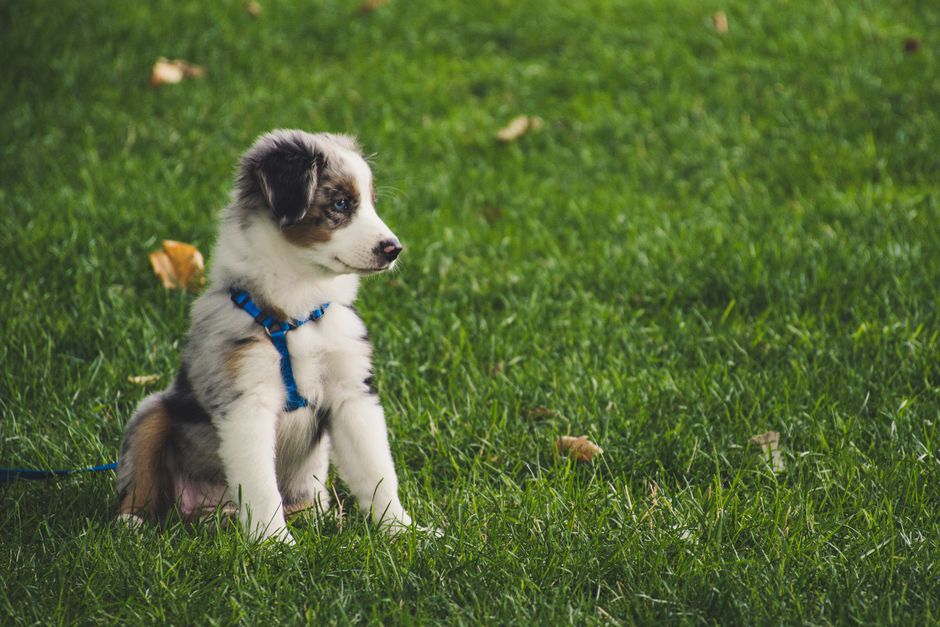
New puppy owners often ask for a single list of "commands to teach by age." The honest answer is that a puppy's first year is less about checking boxes and more about layering skills on top of a nervous system that is still developing. Bite inhibition, house manners, socialization, and basic cues all need attention, but not all at once and not in the same order for every dog. This timeline breaks the first twelve months into stages, so you can focus your energy on what actually matters at each point instead of trying to do everything from week one.
Weeks 8–10: Arrival, Safety, and Gentle Exposure
When a puppy first comes home, the priority is helping them feel safe, not drilling obedience. This is the stage for building a predictable routine: consistent feeding times, a confinement area such as a crate or pen, and a potty schedule tied to naps, meals, and play. Short, upbeat sessions of name recognition, hand-targeting, and rewarding calm behavior lay the groundwork for everything that follows. Socialization can and should start now in controlled, low-risk ways — carrying your puppy to see new surfaces, sounds, and calm people, without requiring direct contact with unknown dogs before vaccination schedules are complete.
- Establish a crate or pen as a positive, quiet space, not a punishment tool.
- Begin a consistent potty-break routine tied to the clock, not just accidents.
- Reward your puppy for choosing to check in with you around distractions.
- Keep sessions under five minutes; a young puppy's attention span is short.
Weeks 10–16: Bite Inhibition and the Socialization Window
Veterinary behavior organizations point to roughly the first three to four months of a puppy's life as a critical period for socialization — a window where positive exposure to new people, dogs, environments, and sounds has an outsized effect on adult temperament. This is also when mouthing and play-biting peak. Rather than punishing nipping, the more effective approach is to redirect onto toys, reward soft mouths, and calmly end play when teeth get too hard. This stage is also the right time to start sit, down, and a reliable recall in low-distraction settings, since the puppy's brain is highly receptive to new associations.
Why this window matters
Puppies who miss varied, positive exposure during this period are statistically more likely to develop fear or reactivity later, which is why reputable trainers encourage supervised puppy classes and controlled outings even before vaccines are fully complete, as long as the venue and other dogs are vetted for health and safety.
Months 4–6: Adolescence Begins
Somewhere around four months, many owners feel like their "good puppy" has vanished. Teething intensifies, independence grows, and previously solid cues seem to fall apart around distractions. This is normal adolescent development, not regression. The focus should shift to practicing known cues in gradually harder environments, reinforcing impulse control (wait at doors, leave scattered food, settle on a mat), and continuing socialization with an added layer of teaching calm behavior around exciting triggers. Owners of high-energy or working breeds often notice this stage is when structured outlets become essential rather than optional; see Training High-Energy Breeds: Channeling Drive Productively for ideas that fit naturally into this period.
Months 6–12: The Long Adolescent Stretch
Dogs are not behaviorally adult at six months, and many breeds, especially larger ones, don't settle until closer to two or three years old. During this stretch, the goal is consistency and generalization: practicing cues in new locations, around other dogs, and with real-world distractions like delivery drivers or skateboards. Many owners find it useful to compare notes with the adjustments made for dogs who arrive as adults rather than puppies, covered in Teaching an Adult Dog New Skills: What's Different, since the underlying learning science is the same even though the starting point differs. A second heat cycle, growth spurts, and shifting hormones can all cause temporary wobbles in confidence or focus — patience and a return to easier reps usually resolves this faster than pushing through.
A Month-by-Month Quick Reference
| Age | Primary focus | Typical session length |
|---|---|---|
| 8–10 weeks | Routine, name, crate comfort, gentle exposure | 2–5 minutes |
| 10–16 weeks | Socialization window, bite inhibition, sit/down/recall basics | 5 minutes |
| 4–6 months | Impulse control, teething management, distraction training | 5–10 minutes |
| 6–9 months | Generalizing cues, structured exercise, loose-leash walking | 10–15 minutes |
| 9–12 months | Reliability around real-world distractions, settling independently | 10–15 minutes |
Common Mistakes
- Waiting until vaccines are "done" to socialize at all. This can mean missing most of the critical window; vetted puppy classes and careful outings are generally considered a reasonable risk trade-off by veterinary behavior groups.
- Treating adolescence as a training failure. Owners who punish harder when cues fall apart around 5–8 months often damage trust instead of fixing the behavior, which is driven by development, not defiance.
- Over-long training sessions. A puppy drilled for 20 minutes straight gets frustrated or shuts down; short, frequent sessions teach faster.
- Skipping impulse control for "cute" tricks only. Fun tricks matter less long-term than wait, leave it, and calm settling, which prevent bigger problems later.
- Inconsistent household rules. If one family member allows jumping and another doesn't, the puppy can't learn a clear pattern.
- Assuming physical exercise alone will tire out a young puppy. Overexertion on growing joints can cause harm; mental enrichment is often a safer way to burn energy in very young puppies.
Frequently Asked Questions
At what age should formal training start?
Training in the broad sense — rewarding good choices, building routine, gentle handling — starts the day your puppy comes home, often around 8 weeks. Formal cue training like sit and down can begin immediately in short, upbeat sessions.
Is it normal for my puppy to seem to "forget" training around 5 months?
Yes. This is a hallmark of adolescence. The dog usually hasn't forgotten; distractions and developmental changes are simply making the behavior harder to perform. Returning to easier reps and higher-value rewards for a while typically restores progress.
How many socialization outings are enough?
There's no fixed number, but variety matters more than volume: different surfaces, sounds, calm people, and safe dogs spread across the 8–16 week window is more valuable than many repeats of the same experience.
Should I enroll in a puppy class?
A well-run class with health screening for attendees is a convenient way to get supervised socialization and basic cue practice in one place, and many trainers consider it a strong option for first-time owners.
Sources
- American Kennel Club (AKC) — general guidance on puppy developmental stages and training timelines.
- American Veterinary Society of Animal Behavior (AVSAB) — position statement on the importance of early socialization.
- ASPCA — guidance on puppy socialization and positive-reinforcement foundations.
- Fear Free Pets — resources on reducing fear during early puppy experiences and vet visits.