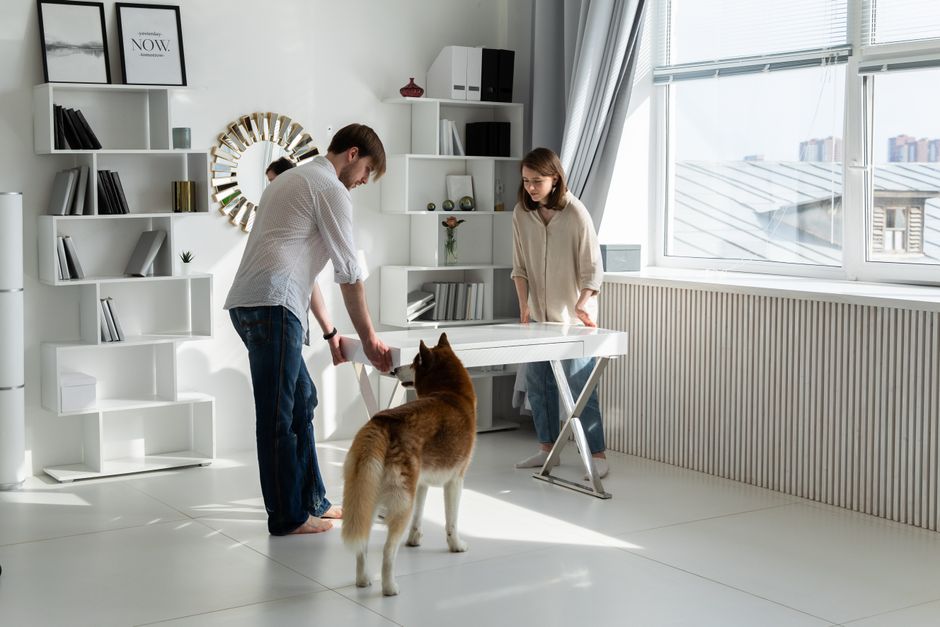
Apartment living doesn't require a different kind of dog — it requires a different set of training priorities. Barking carries through walls, hallways are tight and full of surprise encounters, and there's no yard to burn off energy before a storm of zoomies hits the living room. None of this means apartment dogs are destined for behavior problems. It means a few specific skills deserve more attention than they might in a house with a fenced yard.
Managing Noise Before It Becomes a Neighbor Issue
Barking at hallway sounds, footsteps overhead, or the elevator ding is one of the most common complaints in multi-unit buildings. Rather than only reacting after barking starts, it helps to proactively desensitize a dog to common building sounds at a low volume, pairing them with calm rewards, before they become a trigger. Teaching a strong "quiet" cue — rewarding a pause in barking rather than yelling over it — tends to work far better than shouting, which many dogs read as their owner joining in.
A simple quiet-cue routine
- When the dog barks at a sound, let them bark two or three times, then present a treat near their nose.
- The instant they stop barking to sniff or take the treat, say "quiet" and reward.
- Repeat across multiple short sessions, gradually waiting a beat longer before rewarding the silence.
- Practice with recorded hallway or doorbell sounds at low volume to build the pattern before relying on it in real time.
Hallway and Elevator Manners
Narrow hallways mean a dog is often close to strangers and other dogs with little room to create distance. Teaching a reliable "with me" or heel-adjacent position near doorways, and a default sit-and-wait at elevators, reduces surprise greetings that can escalate into reactivity. It also helps to practice loose-leash walking specifically in tight spaces, not just open sidewalks, since the skills don't always transfer automatically.
- Practice waiting calmly at the apartment door before opening it, rather than bursting into the hallway.
- Teach a default sit at elevator doors so the dog isn't lunging toward whoever steps out.
- Keep greetings with neighbor dogs brief and consensual; not every dog in a building wants to meet yours.
- Carry small, high-value treats on every hallway trip during the training phase, not just on "practice days."
Exercise Substitutes When There's No Yard
Without a yard, physical exercise has to be intentional rather than incidental. Daily walks remain important, but mental enrichment can do a surprising amount of the work that running around a yard would otherwise do. Food puzzles, scent-based games hiding treats around a room, short indoor fetch down a hallway, and structured tug sessions with clear start and stop cues can all meaningfully tire a dog out in limited square footage. Breeds with higher activity needs may need this enrichment combined with more frequent outdoor time; see Training High-Energy Breeds: Channeling Drive Productively for ideas that adapt well to small spaces.
Potty Training Without a Yard
Apartment dogs, especially puppies, often need a consistent elevator-or-stairs-to-sidewalk routine built in from day one, since there's no simple "let them out the back door" option. Some owners also train a balcony or indoor turf option for emergencies, bad weather, or senior dogs who can't manage multiple flights of stairs quickly. Whichever system is used, consistency in timing and location matters more in an apartment than almost anywhere else, since accidents in a small space are harder to fully air out.
Common Mistakes
- Yelling at a barking dog. Many dogs interpret a raised voice as the owner joining the alarm, which can increase barking rather than stop it.
- Only exercising on weekends. Apartment dogs need daily outlets; energy that builds up over a week in a small space tends to come out as destructive or noisy behavior.
- Letting every hallway encounter become a greeting. This can teach a dog to expect and demand attention from every person or dog in the building, which is unsustainable and sometimes unwelcome.
- Skipping desensitization to normal building noise. Without it, every footstep or door becomes a trigger, which wears on both the dog and the neighbors.
- Assuming a tired dog is automatically a calm dog. Overtired dogs can become more reactive, not less; a balance of physical and mental activity works better than exhaustion alone.
Frequently Asked Questions
Can any dog breed live happily in an apartment?
Many can, with the right amount of daily exercise and mental stimulation. Energy level and noise tendencies matter more than size alone — a calm large breed can sometimes do better in an apartment than a high-energy small one.
How do I stop my dog from barking at every hallway noise?
Gradual, low-volume exposure to those sounds paired with calm rewards, plus a trained "quiet" cue, tends to work better than punishment, which can increase anxiety around the trigger sound.
Is it unfair to keep a dog without a yard?
Not if daily walks, mental enrichment, and appropriate exercise are consistently provided. A yard is a convenience, not a requirement, for most dogs' wellbeing.
What's the fastest way to improve elevator manners?
Short, frequent practice sessions rewarding a default sit or stand-still at the elevator door, done consistently rather than only when guests are watching.
Sources
- American Kennel Club (AKC) — guidance on exercise needs and apartment-friendly training.
- ASPCA — resources on managing barking and noise-related behavior.
- American Veterinary Society of Animal Behavior (AVSAB) — position on reward-based approaches to noise sensitivity.
- IAABC — general behavior consulting resources on environmental management in multi-unit housing.