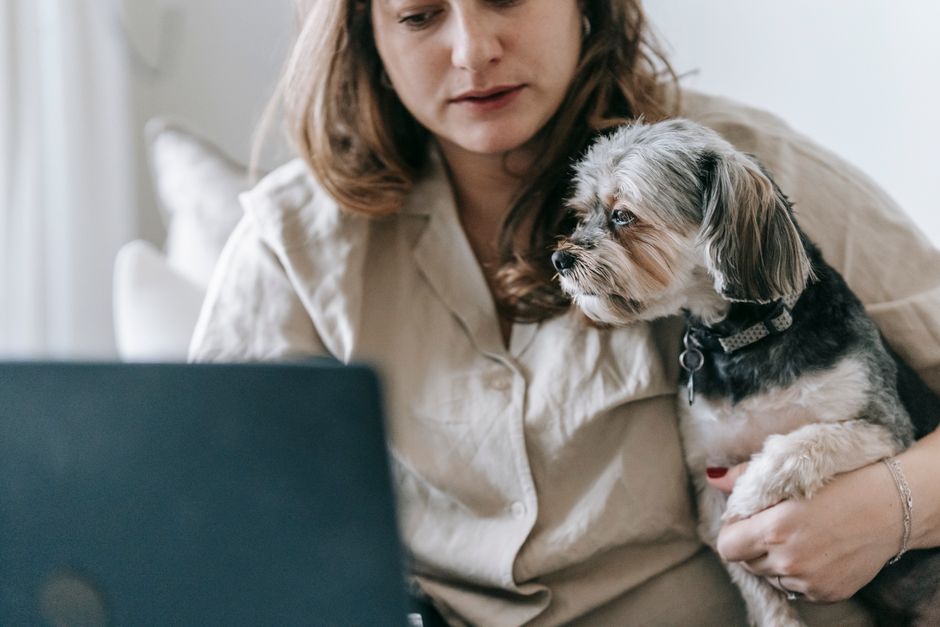
One of the most common reasons owners say their dog's training stalled is simply that life got busy. A full-time job, a commute, and the general churn of a working household can make a daily training session feel like one more thing on an already full list. The good news is that dog training doesn't require long, dedicated blocks of time to work. Several short "micro-sessions" scattered through a normal day are often just as effective as one long session, and far easier to actually sustain.
Why Micro-Sessions Work
Dogs generally learn better in short bursts than in long, repetitive drills, since attention and motivation both fade with repetition. A 2-3 minute session with high engagement and a clean ending tends to produce better results than a 20-minute session that drags on past the point of focus. This means a working household's naturally fragmented schedule — a few minutes before work, a few minutes at lunch if coming home, a few minutes before bed — is actually a reasonable format for training, not a compromise.
Building Training Into Existing Routines
Rather than treating training as a separate task to schedule, it helps to attach it to things that already happen every day. This keeps consistency high without requiring extra willpower or time management.
| Existing routine moment | Training opportunity |
|---|---|
| Making coffee or breakfast | Practice a sit-and-wait at the kitchen gate or door |
| Putting on shoes to leave | Reward calm behavior instead of excited jumping at the door |
| Coming home from work | Practice a calm greeting instead of reinforcing frantic excitement |
| Making dinner | Use a food puzzle or mat-settle exercise nearby |
| Commercial breaks or video calls ending | A quick 2-minute cue review session |
A Sample Weekday Schedule
- Morning (5 minutes): A short walk with a few loose-leash reps and a sit before crossing the street.
- Before leaving (2 minutes): Practice a calm "place" or mat cue so departures don't become anxious events.
- Midday, if possible (5–10 minutes): A dog walker, neighbor, or lunch-break visit for a potty break and a food puzzle.
- Evening arrival (2 minutes): Reward a calm greeting rather than immediately escalating play.
- After dinner (10 minutes): The main "real" training session of the day, covering whatever skill is currently being worked on.
- Before bed (5 minutes): A calm wind-down activity like a chew or gentle settle practice.
Using Enrichment to Cover Gaps
On days when even micro-sessions aren't realistic, food puzzles, frozen stuffed toys, and scent-based games can provide mental engagement without requiring active owner involvement for the full duration. This isn't a replacement for training, but it helps prevent boredom-driven behavior problems from developing during unavoidably busy stretches. Dogs with especially high exercise or mental needs may require more deliberate planning here; see Training High-Energy Breeds: Channeling Drive Productively for structured ideas that still fit a limited schedule.
What to Prioritize When Time Is Truly Tight
When time is genuinely limited, it helps to prioritize the skills with the highest safety and daily-life payoff: a reliable recall, a calm departure and arrival routine, and loose-leash walking tend to matter more day-to-day than less practical tricks. Skills can be layered back in once the schedule allows more time, but these core few are worth protecting even on the busiest weeks.
It also helps to involve other members of the household, even briefly. A roommate, partner, or older child who can run one two-minute rep of a cue while making their own coffee effectively doubles the day's training touches without adding any extra time to anyone's schedule. The key is keeping everyone using the same cue words and the same rules, since a dog who gets a sit rewarded by one person and ignored by another learns a less consistent lesson than one trained the same way by multiple people. A shared one-page list of current cues and house rules, posted somewhere visible, keeps this consistent even on hectic weeks when there's no time to compare notes out loud.
Common Mistakes
- Waiting for a "free weekend" to train. Infrequent, long sessions tend to produce less consistent progress than short, daily ones.
- Letting excited departures and arrivals go untrained. These moments happen daily in a working household and can quietly reinforce anxious or hyper behavior if left unaddressed.
- Treating enrichment toys as a full substitute for training and connection. They help fill gaps but don't replace the relationship-building that comes from active training time.
- Trying to fix everything at once during limited time. Focusing on one or two priority behaviors produces more visible progress than spreading thin attention across many skills.
- Skipping midday breaks for young or high-energy dogs. Long stretches alone can lead to accidents or destructive behavior that then gets mistaken for a training failure.
Frequently Asked Questions
Is it possible to properly train a dog with a full-time job?
Yes. Consistency across short daily sessions tends to matter more than total weekly minutes, which makes a busy schedule compatible with real progress.
How long should a single training session be?
Many trainers suggest 2–10 minutes per session for most skills, ending while the dog is still engaged rather than pushing until attention fades.
Should I hire a dog walker or use daycare to make up for limited time?
Both can help with exercise and socialization, but they don't replace training time with the owner, since the dog needs to learn cues and routines specific to the household.
What if I miss a day of training?
One missed day rarely undoes progress. Consistency over weeks matters far more than a perfect daily streak.
Sources
- American Kennel Club (AKC) — guidance on short, effective training session structure.
- CCPDT — general standards on session length and consistency in reward-based training.
- ASPCA — resources on enrichment for dogs left alone during work hours.
- American Veterinary Society of Animal Behavior (AVSAB) — position on maintaining consistent, low-pressure training routines.