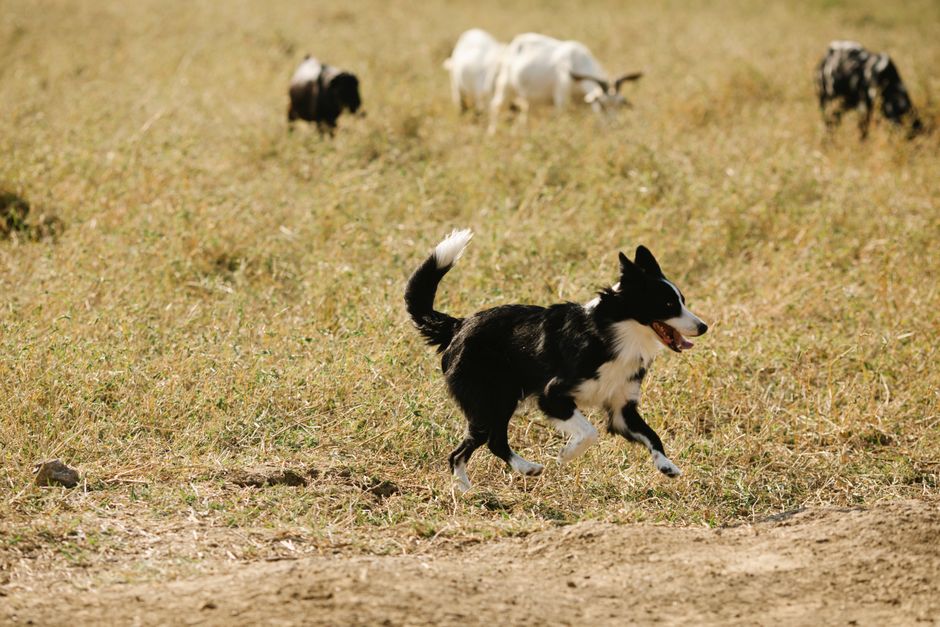
Border Collies, Australian Shepherds, Belgian Malinois, and many other working and herding breeds were bred for jobs that required stamina, problem-solving, and intense focus for hours at a time. When that same dog ends up in a home with a 20-minute evening walk and nothing else, the drive doesn't disappear — it comes out sideways, as herding the kids, chasing shadows, destroying furniture, or barking at anything that moves. The fix isn't more exhausting exercise alone; it's giving that drive a structured, appropriate outlet.
Why Exercise Alone Isn't Enough
It's a common and understandable mistake to think a tired high-energy dog is simply one who has run more. In practice, many working breeds build physical stamina faster than they build an "off switch," meaning more running can sometimes create a dog who is better conditioned to run even more, without teaching any calmness at all. Mental engagement — problem-solving, scent work, structured training — tends to produce a more lasting sense of satisfaction than physical tiring alone.
Give the Breed's Instinct a Legal Outlet
Most problem behaviors in high-drive breeds are a mismatched version of a real instinct. A herding breed nipping at heels or circling children is often expressing herding drive with no sheep available. Rather than only suppressing this, many trainers redirect it into structured activities that use the same instinct appropriately.
| Instinct showing up as a problem | Productive outlet |
|---|---|
| Herding kids or chasing bikes | Treibball, flirt pole work, structured herding classes where available |
| Intense focus on movement | Flyball, agility, or fetch with a clear start/stop cue |
| Nose-driven obsession with smells | Scent work, nose-work classes, hide-and-seek games with treats |
| Guarding or alert barking | Trained "watch" and "that'll do" cues that reward calm alertness |
Build a Structured Daily Routine
High-drive dogs tend to do best with predictable structure rather than open-ended freedom, which can otherwise turn into self-directed, unwanted activities like fence-running or digging. A day that includes a mix of physical exercise, a training session, and a period of enforced calm (a mat or crate rest) tends to produce a more settled dog than a day of nonstop activity with no downtime built in.
- Morning: a focused walk or run, ideally with some sniffing time included, not just pace.
- Midday: a 10–15 minute training or puzzle session using food-dispensing toys or short obedience drills.
- Afternoon: structured play such as fetch or tug with clear rules and a reliable "drop it" or "that'll do" cue to end the game.
- Evening: an enforced settle period on a mat or in a crate, rewarded for calm rather than left to self-soothe through pacing.
Teaching an "Off Switch"
One of the most valuable skills for a high-drive dog is learning to settle on cue. This isn't about suppressing energy; it's about teaching the dog that calm behavior also earns rewards, not just activity. A mat-settle exercise — rewarding a dog for lying down and relaxing on a specific mat, gradually for longer durations and around more distraction — gives many working-breed dogs a skill they can fall back on in exciting situations, from doorbells to visitors to car rides.
Adapting for Smaller Living Spaces
Not every high-energy dog lives on acreage. Many thrive in apartments or city homes as long as mental engagement fills some of the gap that space would otherwise provide; see Training Essentials for Apartment-Dwelling Dogs for specific indoor enrichment ideas that pair well with the structured routine above.
Common Mistakes
- Relying only on physical exercise. This can build stamina without building calmness, leading to a dog who needs even more activity over time.
- Giving a job with no rules. Unstructured fetch or tug without a clear start and stop cue can amplify arousal instead of channeling it productively.
- Punishing instinct-driven behavior without redirecting it. Suppressing herding or chasing instincts without an outlet often just shifts the behavior to a new target.
- Skipping downtime entirely. A dog who is always "on" rarely learns to self-regulate; enforced rest periods are part of training, not a break from it.
- Assuming the breed, not the individual, determines the plan. Drive levels vary within breeds; some adjustment to the specific dog's intensity is always needed.
Frequently Asked Questions
Is a high-energy breed a bad fit for a first-time owner?
Not necessarily, but it does require more structured daily engagement than lower-drive breeds. Owners willing to commit to daily mental and physical outlets can do well with these breeds even without prior herding or working-dog experience.
How much exercise does a high-drive dog actually need?
It varies widely by individual and breed, but the more important factor is usually the mix of physical and mental activity, not the total minutes of exercise alone.
Can training replace some physical exercise?
To a meaningful degree, yes. Short, focused training or puzzle sessions can be mentally tiring in a way that complements, though doesn't fully replace, physical movement.
My dog herds our children — is this dangerous?
It can startle or frighten children even when not aggressive. Redirecting the instinct into an appropriate outlet and teaching a reliable "that'll do" cue around kids is the safer long-term approach.
Sources
- American Kennel Club (AKC) — breed-specific guidance on herding and working breed temperament and exercise needs.
- American Veterinary Society of Animal Behavior (AVSAB) — position on reward-based management of instinct-driven behavior.
- IAABC — resources on breed-specific behavior consulting and enrichment strategies.
- CCPDT — general standards for structured, humane training of high-drive dogs.