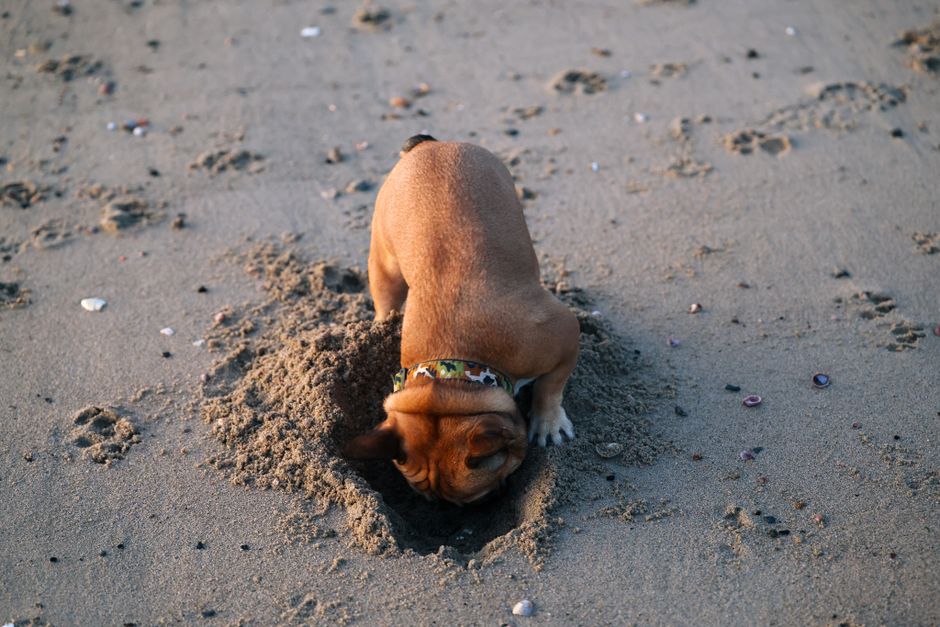
Digging is one of the most instinctive behaviors a dog can show, with roots in ancestral behaviors like denning, hunting burrowing prey, and regulating body temperature by reaching cooler soil underground. Some breeds, especially terriers and northern breeds, carry a particularly strong digging drive, but any dog can develop the habit if the right conditions line up. Because digging is rooted in instinct and need rather than mischief, the most sustainable fix usually isn't suppression — it's figuring out what need the digging is meeting and offering a version of it that doesn't involve the flower bed.
The Main Reasons Dogs Dig
| Motivation | Typical pattern |
|---|---|
| Temperature regulation | Digging shallow pits in shade or near structures, more common in hot weather |
| Boredom or excess energy | Digging during unsupervised yard time, especially with little else to do |
| Prey drive | Focused digging at a specific spot, sometimes following rodent activity |
| Denning instinct | Digging at bedding or blankets before settling down |
| Anxiety or escape attempts | Digging along fence lines or at doors, often paired with other stress signs |
Reading Where and When It Happens
Location is one of the best clues to the cause. Digging near a fence line, especially paired with attempts to escape, suggests either anxiety or a strong desire to reach something beyond the yard, and deserves a closer look at what's happening on the other side. Digging in a cool, shaded corner on a hot day is almost always about temperature. Digging in one specific spot repeatedly, especially if preceded by sniffing and pouncing, usually points to a buried scent or small animal activity rather than a general digging habit.
Giving Digging an Acceptable Outlet
- Choose or build a designated digging spot — a sandbox, a loose-soil garden bed, or a kiddie pool filled with sand or dirt works well.
- Make the designated spot more appealing than the rest of the yard by burying a few toys or treats in it to start.
- Redirect your dog there calmly whenever you catch digging elsewhere, rather than only scolding the unwanted spot.
- Reward digging in the approved area enthusiastically for the first several weeks to build the new habit.
- Block off or make off-limits areas temporarily less accessible (chicken wire laid flat, raised beds) while the new habit forms.
- Add shade structures or a cooling mat if temperature regulation seems to be the main driver.
Addressing the Root Cause, Not Just the Yard
If digging is driven mainly by boredom or pent-up energy, more structured exercise and mental enrichment — the same principle that helps with destructive chewing — often reduces digging noticeably within a couple of weeks. If digging looks more like an escape attempt or clusters with other anxious behaviors, it's worth considering whether separation anxiety or general stress is contributing, since a dog trying to dig out from under a fence while alone is often trying to reach a person, not just entertain itself.
When Digging Isn't a Problem at All
Not every dig needs a fix. Occasional digging in a far corner of the yard, or a quick scratch at bedding before lying down, is well within normal behavior and doesn't need intervention. The goal is a reasonable outlet for a natural instinct, not zero digging anywhere, ever.
Seasonal and Age-Related Patterns
Digging often increases in hot weather, since cooler soil a few inches down offers real relief for a dog without easy access to shade or air conditioning, and it can also pick up during spring and fall when rodents and insects become more active underground. Puppies frequently dig simply while exploring texture and novelty in a new yard, and this tends to fade somewhat with age as other outlets for energy and curiosity develop, though the instinct itself never fully disappears. Watching for these seasonal and age-related patterns helps set realistic expectations rather than assuming a sudden increase in digging reflects a new problem.
Common Mistakes
- Punishing digging after it already happened. Without catching the behavior in the moment, a scolding doesn't connect to the act and only adds confusion or stress.
- Filling in holes without addressing the cause. If the underlying motivation (heat, boredom, prey, anxiety) isn't addressed, the dog will often just dig again, or dig somewhere new.
- Assuming it's always boredom. Treating every case the same way misses motivations like temperature regulation or anxiety that need a different response.
- No designated outlet offered. Simply blocking all digging spots without giving an approved alternative leaves the underlying need unmet.
- Leaving a dog unsupervised in the yard for long stretches. This gives plenty of opportunity for digging habits to form and strengthen unnoticed.
- Ignoring fence-line digging as "just digging." This pattern can signal an active escape risk or anxiety and deserves closer attention.
Frequently Asked Questions
Are some breeds more prone to digging?
Yes. Terriers, Dachshunds, and northern breeds like Huskies often have a stronger instinctive drive to dig, though any dog can develop the habit under the right conditions.
Will more exercise stop the digging?
It helps significantly when boredom or excess energy is the main driver, but it won't resolve digging rooted in temperature regulation, prey drive, or anxiety on its own.
Is it okay to let my dog have a digging pit?
Yes, a designated digging area is one of the most effective and dog-friendly ways to redirect the instinct rather than fight it.
My dog digs at the fence line specifically — what does that mean?
This often points to either an escape motivation (something interesting on the other side) or anxiety. It's worth observing what's happening beyond the fence and whether other stress signs are present.
Sources
- American Kennel Club (AKC) — guidance on breed-related digging tendencies and redirecting instinctive behaviors.
- ASPCA — resources on providing enrichment outlets for natural dog behaviors.
- Humane World for Animals — guidance on yard enrichment and reducing problem digging through redirection.