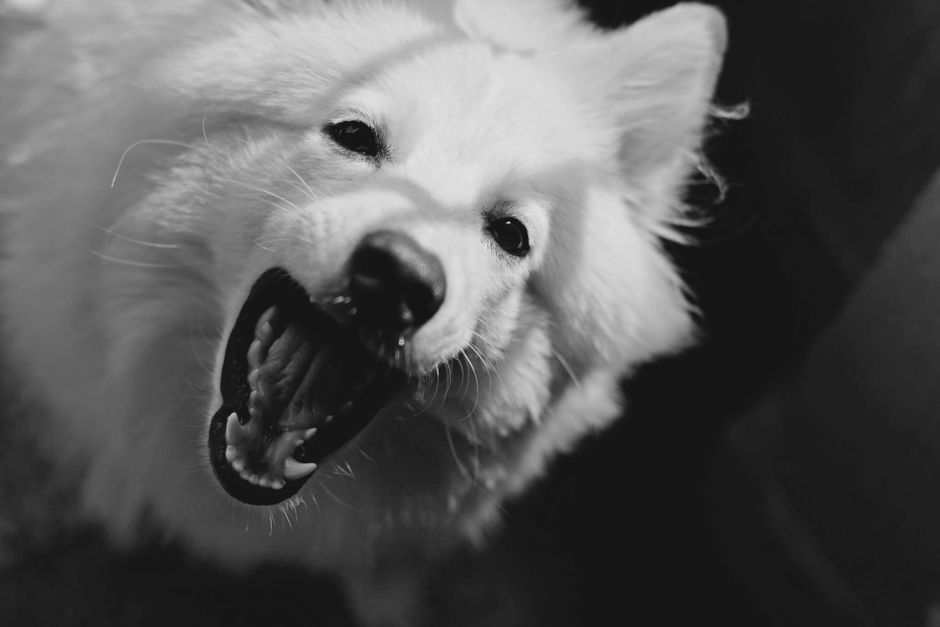
Reactivity on leash — the sudden barking, lunging, and growling many owners describe as their dog "losing it" at another dog or a stranger — looks aggressive, but it's overwhelmingly driven by fear rather than any desire to dominate or attack. A reactive dog is usually trying to increase distance from something they find threatening, and because the leash prevents them from creating that distance themselves, the only tool left is a big, loud display meant to make the trigger back off or go away. Understanding reactivity as a fear response, not defiance, changes the entire approach: the goal becomes helping the dog feel safer at a given distance, not punishing the outburst.
Why "Dominance" Doesn't Explain Reactivity
Older explanations framed reactive and aggressive behavior as a dog trying to assert rank, but that framework doesn't match what actually happens physiologically during a reactive episode: elevated heart rate, dilated pupils, a lowered or tucked body alongside the lunging, and a quick return to normal once the trigger is gone. These are hallmarks of a fear or stress response, not a calculated bid for status. Modern behavior science treats reactivity as an emotional response to a perceived threat, which is also why punishment-based corrections tend to make it worse rather than better — they add more threat to an already fearful moment.
Common Triggers
| Trigger | What it often looks like |
|---|---|
| Unfamiliar dogs | Barking and lunging that escalates as distance closes |
| Strangers, especially fast movement or direct approach | Barking, backing away, sometimes lunging if cornered |
| Specific sounds or objects (bikes, skateboards, umbrellas) | Startled reaction followed by barking at the object |
| Confined spaces (hallways, tight sidewalks) | Heightened reactivity due to reduced ability to retreat |
The Concept of Threshold
Every reactive dog has a "threshold" distance at which they can notice a trigger and stay calm, versus a closer distance at which they tip into barking and lunging. Training only works below threshold — once a dog is already reacting, they're too aroused to learn anything new in that moment. The entire strategy of reactivity work is to operate at a safe distance, reward calm awareness of the trigger, and only decrease distance gradually as the dog's threshold improves.
A Distance-Based Training Approach
- Identify your dog's current threshold distance for a specific trigger by watching for the first signs of stiffening or fixating.
- Work at a distance clearly beyond that threshold, where your dog can see the trigger but stay relaxed.
- Mark and reward calm behavior the instant your dog notices the trigger without reacting (sometimes called "engage-disengage").
- If your dog starts to escalate, simply increase distance — this isn't a failure, it's correct management.
- Decrease distance in very small increments only after consistent calm responses at the current distance over multiple sessions.
- Keep sessions short and end on a calm note rather than pushing for one more rep past your dog's comfort.
Where This Overlaps With Other Behaviors
Reactivity often shows up alongside leash pulling, since a dog straining toward or away from a trigger looks similar to ordinary excitement-based pulling at a glance — the difference is in the body language and the presence of a specific trigger. It can also overlap with resource guarding when the "resource" being protected is the owner rather than an object. Separating these patterns out helps target training correctly instead of treating every tense moment the same way.
Common Mistakes
- Punishing the bark or lunge. Adding a correction to an already fearful moment increases the dog's stress and can intensify the reaction over time.
- Forcing closer exposure to "get it over with." Flooding a fearful dog with the trigger at close range typically increases fear rather than building tolerance.
- Working too close, too soon. Training above threshold means the dog is too aroused to learn, no matter how many treats are offered.
- Avoiding triggers completely instead of working with distance. Total avoidance can feel safer short-term but doesn't build the coping skills needed long-term.
- Assuming it's dominance and using physical corrections. This framework is outdated and tends to escalate fear-driven behavior.
- Expecting quick results. Reactivity rooted in genuine fear usually takes consistent work over months, not days.
Frequently Asked Questions
Is my dog being aggressive or just reactive?
Reactivity is an exaggerated response to a perceived threat and is usually distance-driven — it decreases as the trigger moves away. True aggression is less common and is better assessed with a professional's in-person evaluation.
Can reactivity be fully cured?
Many dogs significantly improve and can function comfortably in daily life, especially with early, consistent work. Complete elimination of any trigger sensitivity isn't always realistic, but manageable, livable progress is.
Should I let other dogs approach to "socialize" my reactive dog?
No. Forced greetings with an already fearful dog usually backfire and can worsen reactivity. Controlled distance work is safer and more effective.
Does reactivity mean my dog is poorly socialized?
Not necessarily. Genetics, past experiences, and individual temperament all play a role, and even well-socialized dogs can develop reactivity after a single frightening event.
Sources
- American Veterinary Society of Animal Behavior (AVSAB) — position statements on fear-based behavior and the risks of punishment-based correction.
- ASPCA — resources on recognizing fear and stress signals in dogs.
- Fear Free Pets — guidance on reducing fear, anxiety, and stress during triggers.
- IAABC (International Association of Animal Behavior Consultants) — guidance on distance-based desensitization for reactive dogs.