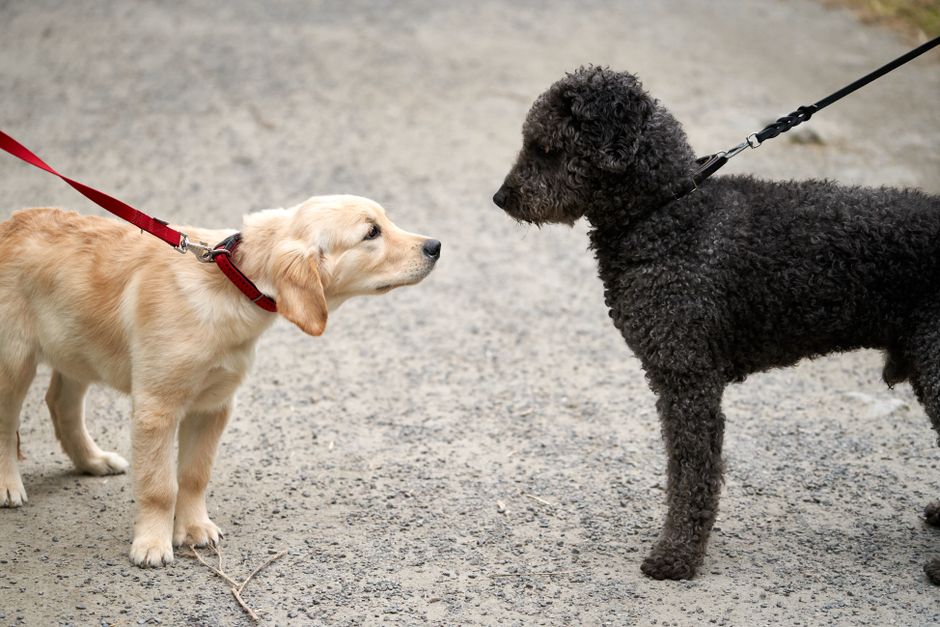
For a lot of dogs, a knock at the door or a stranger on the sidewalk is the most exciting moment of the day. That excitement is understandable, but it can also mean jumping, mouthing, frantic spinning, or barking that makes greetings stressful for everyone involved, including the visitor. The good news is that calm greetings are a skill you can build gradually, using the same reward-based approach that works for any other behavior.
Why Dogs Get Overexcited Around New People
Most greeting problems come from a mix of genuine excitement and a lack of a clear, trained alternative. If jumping has ever gotten attention — even negative attention like being pushed away or scolded — it can be reinforced simply because it worked to get a reaction. Dogs that had limited exposure to new people during puppyhood, covered in our article on the puppy socialization window, sometimes swing to the opposite extreme and either overreact or hang back nervously. Either way, the fix is the same: give the dog a specific job to do instead of relying on them to "calm down" with no instructions.
Setting Visitors Up for Success
Before working on the dog's behavior, it helps to set the scene:
- Keep a leash or long line near the door for the first several sessions, so you have a way to guide your dog without grabbing or scolding.
- Ask visitors in advance to ignore the dog — no eye contact, no talking, no touching — until the dog is calm.
- Have treats staged near the entry point, not in your pocket where you'll fumble for them.
- Practice with people your dog already knows before working up to true strangers.
Step-by-Step: Teaching a Calm Greeting
- Teach a default behavior away from the door first — a sit or a settle on a mat — in a low-distraction setting.
- Practice that same behavior with mild distractions, like a family member walking past.
- Have a helper knock or ring the bell while you cue the sit or mat behavior, rewarding calm responses.
- Gradually add a real person at the door, starting with someone familiar, keeping the dog on a leash for control.
- Reward the dog for staying settled as the visitor enters, rather than waiting until the dog is already jumping to react.
- Let the visitor approach and greet the dog only once all four paws are on the floor and the dog is relatively calm.
- Repeat across many short sessions with different people before expecting consistency with true strangers.
Managing Jumping and Mouthing
If your dog jumps, turn away and remove your attention rather than pushing them off, which can read as play to an excited dog. The moment all four paws touch the ground, turn back and reward calm. For mouthing during greetings, redirect to a toy held near the door, and interrupt the interaction briefly if teeth touch skin, resuming only once the dog is calmer. Consistency across every person in the household matters here — mixed rules confuse the dog and slow progress.
Greeting Strangers on Walks
| Scenario | What to try |
|---|---|
| Stranger wants to pet your dog | Ask them to let your dog approach first, hand low, no reaching over the head |
| Your dog pulls toward people | Stop walking, wait for slack in the leash, then release to approach calmly |
| Dog gets overexcited after greeting one person | Take a short break, add distance, and let arousal settle before the next greeting |
| Dog seems nervous rather than excited | Don't force contact; let the dog observe from a distance instead |
If you're working on greetings specifically with children, our article on teaching safe interactions between dogs and children covers ground rules that apply well beyond the household. And if crowded spaces like busy sidewalks tend to overwhelm your dog, the same short-break, add-distance approach works well there too.
When Greetings Involve Fear Rather Than Excitement
Not every greeting problem is about too much enthusiasm. Some dogs hang back, freeze, or try to retreat from new people. Pushing a nervous dog into contact tends to make things worse, not better. If that sounds like your dog, the gradual, reward-paired approach described in our desensitization and counterconditioning guide is a better starting point than greeting practice alone.
Common Mistakes
- Letting visitors greet the dog the moment they arrive. This rewards the exact excitement level you're trying to lower.
- Inconsistent rules between family members. If one person allows jumping and another doesn't, the dog can't learn a clear pattern.
- Scolding or yelling during an overexcited greeting. This adds more arousal and confusion rather than calm.
- Skipping straight to real strangers. Practicing only with familiar people first builds the skill with far less pressure.
- Forcing a nervous dog to "say hi." This can increase fear rather than build confidence.
- Expecting one good session to fix the habit permanently. Greeting behavior typically needs ongoing practice across many real-world situations.
Frequently Asked Questions
How long does it take to fix jumping on guests?
It varies by dog, but most owners see steady improvement over several weeks of consistent practice. Dogs with a long history of being rewarded for jumping may take longer.
Should I use a leash indoors during training?
Yes, especially in the early stages. A leash gives you a gentle way to guide your dog back to the mat or sit position without grabbing their collar or shouting.
Is it okay to crate my dog when visitors arrive instead of training greetings?
A crate or separate room can be a reasonable short-term management tool, especially during a party or if your dog is overwhelmed, but it doesn't replace teaching the skill for everyday situations like deliveries or casual visitors.
My dog is fine with people but barks at other dogs on walks. Is that related?
It's a related but distinct skill. Our article on reading how your dog interacts with other dogs is a better next stop for that specific issue.
Sources
- American Kennel Club (AKC) — training guidance on teaching polite greetings and reducing jumping.
- Certification Council for Professional Dog Trainers (CCPDT) — reward-based standards for shaping everyday behaviors like greetings.
- ASPCA — resources on managing overexcited or fearful greeting behavior in dogs.
- Fear Free Pets — guidance on reducing stress during interactions with unfamiliar people.