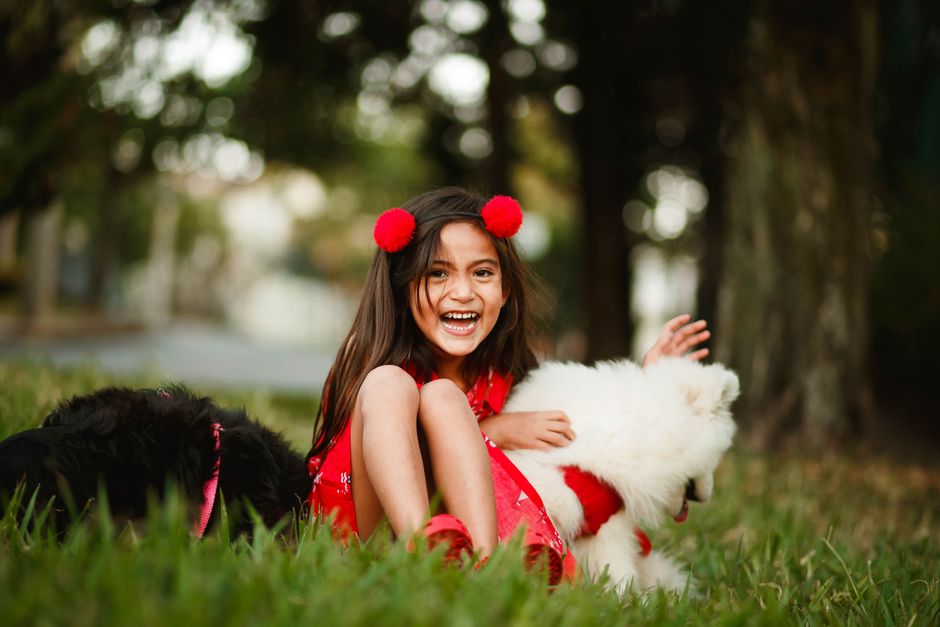
Dogs and children can build wonderful relationships, but that relationship needs structure on both sides — rules for the child, management for the dog, and consistent adult supervision connecting the two. Many of the risky moments between dogs and kids aren't dramatic; they're ordinary interactions like hugging, climbing over a resting dog, or reaching for a toy, where good intentions aren't enough on their own. This guide covers the habits that keep those ordinary moments safe.
Why Supervision Is the Most Important Rule
No set of rules replaces active supervision. Young children in particular can't reliably read a dog's warning signals or predict how their own behavior will be received, and dogs can't be expected to tolerate everything a child might do. "Active" supervision means being close enough to intervene, paying attention rather than half-watching from across the room, and stepping in before a situation escalates rather than after.
Ground Rules for Children
- Always ask before petting a dog, including your own family dog, especially if they're eating, sleeping, or chewing something.
- No hugging, climbing on, or lying on top of a dog, even a dog who tolerates it most of the time.
- Let the dog come to you rather than chasing or cornering them.
- No taking toys, food, or chews directly from a dog's mouth or bowl.
- Keep voices and movements calm rather than screaming or running directly at a dog.
- If the dog walks away, let them go rather than following and continuing contact.
Ground Rules for the Dog
Dogs benefit from their own set of boundaries too. Basic obedience cues like sit, stay, and a reliable "go to your spot" give a dog an alternative to jumping, mouthing, or crowding when children are excited or moving quickly. If your dog is still working on calm greetings generally, our guide on teaching calm greetings covers the foundational training that applies directly to interactions with kids.
Teaching Children to Read Dog Body Language
| Signal | What it usually means |
|---|---|
| Moving away, turning head away | The dog wants space — let them go |
| Stiff body, frozen posture | Stop immediately and give the dog room |
| Showing teeth, growling | A clear warning — back away and get an adult |
| Loose, wiggly body, relaxed tail | Generally a good sign the dog is comfortable |
| Yawning or lip-licking out of context | Often a sign of mild stress, worth checking in on |
Even school-age children can learn to recognize these basic signals with practice, and doing so gives them real agency in keeping interactions safe rather than relying entirely on adult intervention.
Safe Interaction Scenarios
- Before any greeting, have the child stand still and let the dog approach on their own terms.
- Keep first greetings between a new dog and a child brief, calm, and supervised closely.
- Teach the child to pet along the side of the dog's body or chest rather than reaching over the head.
- Separate the dog and child during especially high-energy moments, like birthday parties, until the dog has had a chance to settle.
- Give the dog a safe retreat space — a crate or quiet room — that is always off-limits to the child, no exceptions.
Age-Appropriate Involvement
Older children can take on real responsibilities like filling a water bowl, helping with a short training session, or tossing a ball during supervised play. These shared activities build a positive relationship in a structured way, rather than relying on unstructured free-form contact, which is where most risky moments happen. Multi-dog households with children benefit from extra structure as well — see our guide on training tips for multi-dog households for how to manage attention and resources when more than one dog is involved.
Common Mistakes
- Assuming a "good" dog doesn't need supervision around kids. Even calm, well-trained dogs have limits and bad days.
- Letting a child hug or climb on a resting dog. This is one of the most common triggers for defensive snapping.
- Forcing interaction when a child is scared or a dog is avoidant. Pushing either party past their comfort rarely helps.
- Leaving food, bones, or high-value toys accessible during unsupervised time. These are frequent flashpoints between dogs and children.
- Not giving the dog an escape option. A dog with nowhere to retreat is far more likely to resort to a warning snap.
- Assuming older children automatically read dog body language correctly. This still needs to be taught explicitly, even to teenagers.
Frequently Asked Questions
At what age can a child start helping train the family dog?
Many children can help with simple, supervised tasks like cueing a known "sit" with treats by around six or seven, with an adult closely overseeing both the child and the dog throughout.
Our dog seems fine with our own kids but nervous around visiting children. Is that normal?
Yes, this is common, since a dog's comfort with familiar children doesn't always extend automatically to unfamiliar ones. Treat new child introductions with the same care as introducing your dog to new people generally, and supervise closely.
Should we get a dog if we have a toddler?
It's doable with the right dog and strict supervision habits, but toddlers are developmentally unable to reliably follow safety rules, so the burden falls entirely on adults to manage every interaction closely during these years.
What should I do if my dog growls at my child?
Treat it as important information, not disobedience. Separate them calmly, avoid punishing the growl itself, and look closely at what triggered it so you can prevent that specific situation going forward. A pattern of growling is worth discussing with a trainer or veterinary behaviorist.
Sources
- American Veterinary Society of Animal Behavior (AVSAB) — guidance on dog bite prevention and child-dog supervision.
- American Kennel Club (AKC) — resources on teaching children safe ways to interact with dogs.
- ASPCA — guidance on recognizing stress signals relevant to dog-child interactions.
- Humane World for Animals — educational resources on dog bite prevention for families.