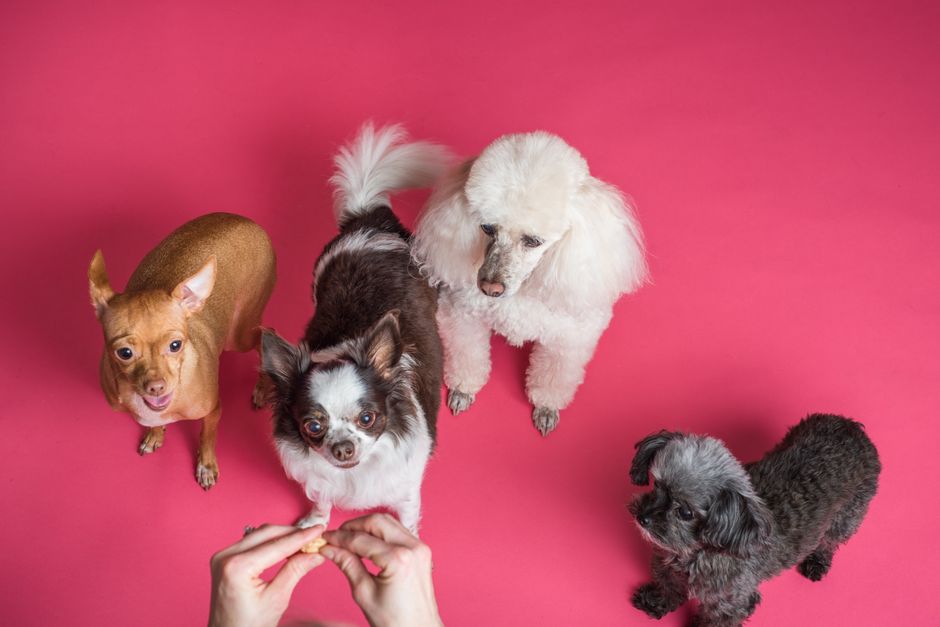
If you've spent any time researching how to train a dog, you've almost certainly run into the phrase "positive reinforcement." It gets used so often that it can start to sound like a marketing slogan rather than an actual training method. In reality, it describes a very specific and well-understood way that behavior changes over time, and understanding the mechanics behind it will make you far more effective than memorizing a list of commands.
What Positive Reinforcement Really Means
Positive reinforcement means adding something your dog values immediately after a behavior you want to see again, which makes that behavior more likely to happen in the future. The "positive" doesn't refer to good feelings in a general sense; it refers to the act of adding a reward. Food, play, access to a favorite toy, praise paired with affection, or even the freedom to go sniff a bush can all function as reinforcement, depending on what that particular dog actually wants in that particular moment.
This is different from training approaches built around correcting or suppressing behavior after the fact. With positive reinforcement, you are actively building behaviors you want rather than just reacting to behaviors you don't want. Over time this tends to produce a dog that offers desired behaviors on its own, because those behaviors have reliably paid off.
How Dogs Learn: A Quick Look at Operant Conditioning
The science behind this is called operant conditioning, which is simply the study of how consequences shape voluntary behavior. A dog sits, a treat appears, and sitting becomes slightly more likely the next time a similar situation comes up. Repeat that enough times in enough contexts, and sitting becomes a strong, reliable habit rather than a fluke. This is the same basic mechanism used in structured skill-building covered in our guide to teaching sit, stay, and come, where each command is built in small, reinforced steps rather than taught all at once.
Dogs don't learn in English. They learn through patterns of cause and effect, repeated often enough to form an association. That means every interaction you have with your dog is technically a training moment, whether you intend it to be or not. A dog that jumps on the counter and occasionally finds food there is being reinforced for counter-surfing, even though no human decided to "train" that behavior.
Timing Is the Hidden Skill
Most of the real skill in positive reinforcement training isn't choosing the right treat. It's timing. A reward delivered more than a second or two after the behavior risks reinforcing whatever your dog is doing at the moment the reward actually lands, not the behavior you meant to reward. This is one of the reasons many trainers introduce a marker signal, such as a clicker or a verbal "yes," which pinpoints the exact moment the dog did something right even if the actual treat takes a few seconds longer to deliver. We cover this in depth in our article on clicker training.
In practice, this means rewarding the sit the instant your dog's hips touch the ground, not two seconds later when you've finished digging in your treat pouch. If your timing is consistently a beat too slow, your dog may start to associate the reward with standing back up rather than sitting.
Choosing Rewards That Actually Work
Not every reward is equally motivating, and not every reward works in every environment. A piece of kibble might be plenty exciting in a quiet living room but completely ignored at a busy dog park. Matching the reward's value to the difficulty of the environment is one of the most overlooked parts of training.
| Reward type | Best used for | Notes |
|---|---|---|
| Everyday kibble or dry treats | Low-distraction practice at home | Convenient for high repetition counts |
| Soft, high-value treats (cheese, chicken, commercial training treats) | New skills, distracting environments | Small pieces keep sessions from becoming a meal |
| Play and toys | Dogs more motivated by play than food | Great for recall and high-energy breeds |
| Life rewards (sniffing, going outside, greeting a person) | Dogs with a strong existing routine | Costs nothing and reinforces real-world manners |
| Praise and touch alone | Maintaining already-learned behaviors | Usually too weak for teaching brand-new skills |
Fading Out Food Without Losing the Behavior
A common worry is that a dog trained with treats will only ever listen when treats are visible. This is a real risk, but it's a result of how reinforcement is managed over time, not an inherent flaw in the method. Once a behavior is reliable, the goal is to shift from rewarding every single repetition to rewarding unpredictably, sometimes with food and sometimes with praise, play, or a life reward. Dogs, like people playing a slot machine, often work hardest for a payout they can't quite predict. Building this kind of variable schedule into short, focused sessions is explained further in our guide to structuring a training session.
Why Punishment-Based Corrections Often Backfire
It's tempting, especially when a behavior feels urgent to stop, to reach for a correction instead of a reward. The trouble is that punishment can suppress a behavior in the moment without teaching the dog what you'd rather see instead, and it can create anxiety or avoidance that shows up as new, harder-to-diagnose problems later. A dog scolded for coming back slowly may start avoiding recall altogether. A reward-based approach sidesteps this by always giving the dog a clear, achievable, rewarding path forward. This foundation-first mindset runs through every article in our Foundations & Basic Commands category.
Common Mistakes
- Rewarding too late. A delayed treat often reinforces the wrong moment, like standing up after a sit, rather than the sit itself.
- Using the same low-value treat everywhere. A treat that works at home may not compete with the smell of another dog at the park.
- Accidentally reinforcing unwanted behavior. Petting a jumping dog to calm it down usually rewards the jumping instead.
- Quitting rewards too soon. Dropping treats entirely right after a dog "gets it" often causes the behavior to fade quickly.
- Training only in one location. A behavior learned solely in the kitchen may not transfer to the backyard or sidewalk without extra practice.
- Overusing the verbal cue. Repeating "sit, sit, sit" teaches a dog that the first few repetitions don't count.
Frequently Asked Questions
Will my dog always need treats to listen?
No. Treats are a tool for teaching and strengthening a new behavior, not a permanent requirement. As behaviors become reliable, most owners shift to intermittent rewards, praise, play, and everyday privileges instead of food every single time.
Is positive reinforcement too soft for a stubborn or strong-willed dog?
Dogs that seem "stubborn" are often undertrained for the environment they're in, or the reward being offered isn't valuable enough to compete with the distraction. Raising reward value and lowering difficulty usually solves this faster than adding corrections.
What if my dog doesn't seem motivated by food or toys?
Some dogs are motivated by things owners overlook, like access to sniff, greet, or explore. Experiment with different reward types in different settings before concluding your dog isn't motivated by anything.
Can I combine positive reinforcement with saying "no"?
A calm interrupter to redirect a dog's attention is different from a harsh correction. Many reward-based trainers use a neutral word to interrupt, then immediately reward the dog for choosing a better behavior instead.
Sources
- American Kennel Club (AKC) — general guidance on reward-based training methods for companion dogs.
- American Veterinary Society of Animal Behavior (AVSAB) — position statements favoring reward-based training over punishment-based methods.
- ASPCA — resources on humane training approaches for new and rescue dog owners.
- Certification Council for Professional Dog Trainers (CCPDT) — standards for professional trainers that emphasize humane, evidence-informed methods.