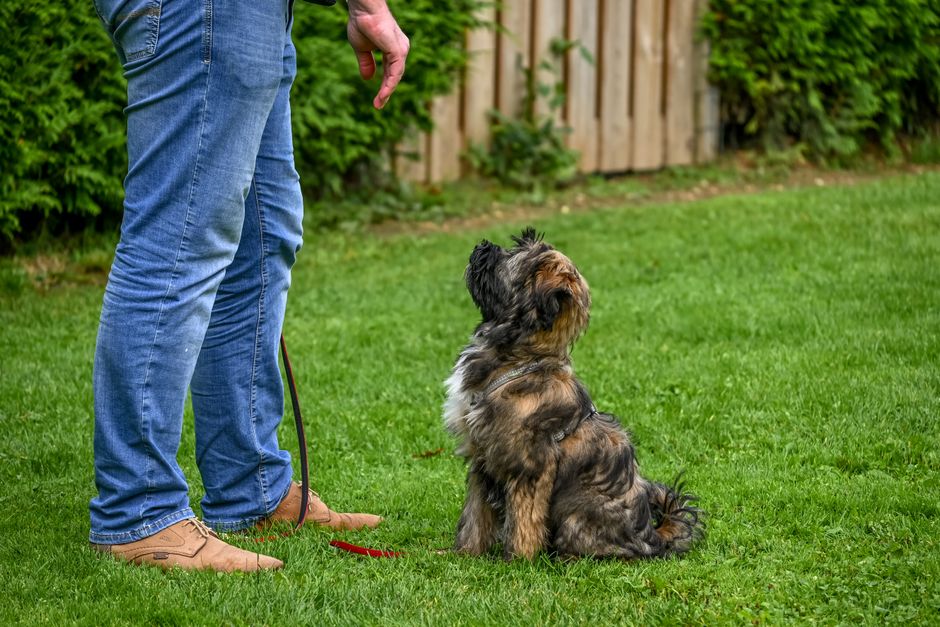
Sit, stay, and come are often the first three skills new owners try to teach, and for good reason. Together they cover impulse control, patience, and safety. But a surprising number of dogs "sort of" know these commands without actually being reliable with them, usually because a step got skipped along the way. This guide walks through each command as its own small project, built in layers rather than taught all at once.
Why These Three Commands Come First
Sit gives you a default, calm behavior you can ask for almost anywhere. Stay extends that calm behavior across time and distance. Come brings your dog back to you from a distance, which matters for safety as much as convenience. Each one builds on skills from the last, which is why most trainers teach them roughly in this order rather than jumping straight to the hardest one. The same reward-based logic covered in our overview of positive reinforcement basics applies to all three: reward the behavior the instant it happens, and build difficulty gradually.
Teaching Sit
- Hold a treat near your dog's nose and slowly move it up and back over their head. As their head tilts up to follow it, their rear end will naturally lower.
- The moment their hips touch the ground, mark the behavior (with a clicker or a cheerful "yes") and deliver the treat immediately.
- Repeat ten to fifteen times in a quiet room before adding the word "sit." Say the word just before you expect the behavior to happen, not after.
- Once your dog sits reliably with the word alone, practice in new rooms, then outdoors, then around mild distractions.
- Phase out the food lure from your hand motion first, while keeping the reward coming after the sit.
Most dogs pick up the mechanics of sitting within a single short session. What takes longer is making the behavior reliable across different rooms, people, and distraction levels, which is where many owners quit too early.
Teaching Stay
Stay is really three separate skills layered together: duration, distance, and distraction. Trying to add all three at once is the single biggest reason dogs struggle with this command.
| Stage | What you add | What you keep easy |
|---|---|---|
| 1. Duration | One extra second at a time, standing right next to your dog | No distance, no distractions |
| 2. Distance | One small step back, then return before releasing | Short duration until distance is solid |
| 3. Distraction | Mild noise, a dropped object, another person walking by | Short duration and distance until the dog can hold through it |
Always use a clear release word, such as "okay" or "free," so your dog learns that stay has a defined end point rather than guessing when it's over. Reward while your dog is still in position occasionally, not only after the release, so staying itself feels worthwhile.
Teaching Come (Recall)
A reliable recall is arguably the most valuable command a dog can know, and it deserves more depth than can fit here. Start in a hallway or fenced yard, say your dog's name followed by "come" in an upbeat tone, and reward enthusiastically the moment they arrive. Never call a dog to you for something unpleasant, like ending playtime at the park or going into the crate, since that teaches dogs to associate coming when called with something they'd rather avoid. For a deeper breakdown of building recall that holds up around real distractions, see our full guide on building reliable recall.
Keeping Sessions Short and Positive
Each of these commands is best practiced in short bursts rather than long drilling sessions. Five minutes of focused, successful repetitions beats twenty minutes of a bored or frustrated dog. We go into exactly how to structure these short sessions, including how many repetitions to aim for and when to stop, in our article on structuring a training session. This same foundation-building approach runs through every command covered in our Foundations & Basic Commands category.
Generalizing the Commands
A command learned only in the living room often falls apart at the park, not because the dog is being defiant but because the behavior hasn't been practiced in that context yet. Once a command is solid in one location, deliberately practice it in at least four or five different settings: another room, the yard, the sidewalk, a friend's house, and somewhere with mild distractions. Dogs don't automatically transfer learning between environments the way people do.
Common Mistakes
- Saying the word before the dog understands the behavior. This just teaches the dog to ignore the word until a lure or hint follows.
- Repeating the cue multiple times. "Sit, sit, sit, sit" trains dogs that the first few repetitions are optional.
- Jumping straight to long stays. Asking for a two-minute stay before a two-second stay is solid sets the dog up to fail.
- Calling a dog to come for something unpleasant. This quietly poisons the recall cue over time.
- Practicing only at home. Commands need deliberate practice in new places to generalize.
- Releasing the stay with the same word used for something else. A clear, dedicated release word avoids confusion.
Frequently Asked Questions
How long should it take to teach sit?
Most dogs learn the physical motion within one or two short sessions. Making it reliable across different rooms and distractions usually takes one to two weeks of brief daily practice.
My dog sits at home but not outside. What's wrong?
Nothing is wrong; the behavior simply hasn't been generalized yet. Go back to using treats and a quieter version of the outdoor environment, then build up distraction gradually.
Should I use a hand signal or a verbal cue?
Either works, and many dogs end up learning both since hand motion naturally accompanies the first few lured repetitions. Pick one as the primary cue and be consistent with it.
What if my dog breaks the stay every time I walk away?
You're likely adding distance faster than duration can support. Return to shorter distances, reward more frequently, and increase distance in smaller increments.
Sources
- American Kennel Club (AKC) — training guidance on foundational obedience commands for pet dogs.
- Humane World for Animals (formerly The Humane Society of the United States) — resources on basic obedience training for new dog owners.
- American Veterinary Society of Animal Behavior (AVSAB) — guidance supporting reward-based teaching of foundational commands.
- International Association of Animal Behavior Consultants (IAABC) — general principles on building reliable behaviors through gradual criteria.