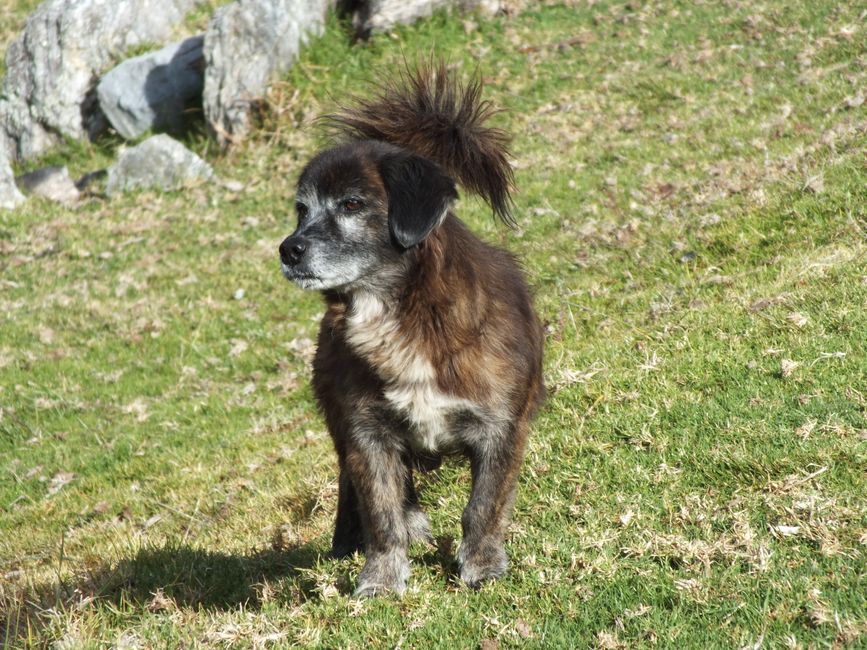
"The tail doesn't lie" is a popular saying among dog owners, but it's only half true. A wagging tail communicates arousal, not necessarily friendliness, and plenty of bites have happened around dogs whose tails were actively moving. The real skill isn't memorizing one cue; it's learning how tail, ear, and posture move together to paint a fuller picture.
Why Tail Wagging Gets Misread So Often
A wag simply signals that a dog is emotionally aroused in some way — it doesn't specify whether that arousal is positive excitement, anxiety, or something closer to defensive tension. The details that separate these states are height, speed, stiffness, and which direction the tail leans.
| Tail Behavior | Likely Meaning |
|---|---|
| Low, loose, wide sweeping wag | Relaxed, friendly greeting |
| Tail held high and wagging stiffly, in small fast motions | High arousal, possible tension or alertness |
| Tail tucked tightly under the body | Fear or submission |
| Tail held level with the back, slow wag | Neutral curiosity, assessing a situation |
| Tail wagging more to one side (asymmetrical) | Research on emotional lateralization suggests a rightward bias can align with more positive states and a leftward bias with more negative ones, though this is subtle and hard to spot casually |
Ear Position and What It Adds
Ears move fast and often telegraph a shift in attention before the rest of the body catches up. Ears pinned flat back usually signal fear or appeasement. Ears pricked sharply forward usually signal focused alertness, which can precede either curiosity or a defensive response depending on everything else happening around the dog. Relaxed, naturally positioned ears — neither pinned nor rigid — generally indicate comfort. Dogs with naturally floppy or cropped ears show a narrower range of visible movement, so owners of these breeds should lean more heavily on body and tail cues.
Posture: The Frame Around the Picture
Overall body posture ties tail and ear signals together. A dog leaning its weight forward, with a stiff tail and forward ears, is a different animal than one leaning back with a tucked tail and pinned ears, even if both are technically "wagging." Watch the whole silhouette: is the dog's spine curved loosely, or is it rigid and straight-backed? Is the dog's weight centered, forward, or retreating?
A Simple Three-Point Check
- Tail: height, speed, and stiffness relative to that dog's normal resting position.
- Ears: forward, neutral, or pinned, and how quickly they're shifting.
- Weight: forward, centered, or retreating, and how stiff the overall frame looks.
When all three point the same direction — loose tail, relaxed ears, centered weight — you can be fairly confident the dog is comfortable. When they conflict, such as a wagging tail with pinned ears and retreating weight, trust the more cautious signals and give the dog space.
Putting It Together With Other Signals
Tail, ear, and posture cues work best alongside the broader body-language vocabulary covered in our guide to understanding dog body language, and they often appear alongside more deliberate calming signals like lip licking or turning away. During play, these same cues shift quickly, which is why it's worth also reading our breakdown of play styles and play signals to tell rough-and-tumble fun from an escalating conflict.
Breed and Individual Variation to Keep in Mind
Not every dog has the same physical range to work with. A Siberian Husky with naturally erect ears and a curled tail shows a very different resting silhouette than a Basset Hound with long, floppy ears and a low-set tail. Docked tails and cropped ears, common in some breeds, remove a lot of the visual information other dogs and people would normally rely on, which is one reason those dogs sometimes get misread in social settings. Coat length and thickness can hide subtle piloerection (raised hackles) that would otherwise be an easy clue to catch. None of this means these dogs are harder to understand in general; it just means the three-point check works best once you've spent some time learning what that specific dog's relaxed baseline actually looks like. A nervous first-time foster dog and a confident, well-socialized adult might show completely different default postures even in the exact same calm situation, so comparing your dog to a general chart is a starting point, not a final answer.
Common Mistakes
- Treating any tail movement as a green light. Speed and height change the meaning dramatically; a fast, high, stiff wag is a caution sign, not an invitation.
- Ignoring breed differences in tail and ear shape. A naturally curled or docked tail, or naturally erect ears, changes what's visible and requires a slightly different baseline.
- Reading ears in isolation. Pinned ears alone could mean fear, excitement, or simple focus; context from the rest of the body is needed.
- Assuming a crouched posture always means submission. It can also precede a defensive lunge, so crouching alone isn't enough information.
- Only checking the dog once. These signals shift quickly; a dog can go from relaxed to tense within seconds, so a single glance isn't reliable.
Frequently Asked Questions
What's the biggest giveaway that a wag isn't friendly?
Stiffness. A loose, sweeping wag reads very differently from a tight, fast, high wag, even though both are technically wagging. Stiffness almost always signals elevated arousal rather than relaxed friendliness.
Can tail and ear signals differ between breeds?
Yes. Breeds with naturally pricked ears, docked tails, or unusually long or curly tails show a different visual range than breeds without those traits, so it helps to learn your own dog's typical resting state first.
What should I do if the signals seem mixed?
Default to caution. If tail, ears, and posture are sending different messages, treat the situation as uncertain, give the dog space, and avoid pushing the interaction further.
Do puppies show these signals the same way as adult dogs?
Puppies are still developing full control and clarity over these signals, so their cues can be less consistent. Give young puppies some grace and watch patterns develop as they mature.
Sources
- American Kennel Club (AKC) — reference materials on tail position, ear position, and canine body language basics.
- ASPCA — guidance distinguishing friendly arousal from fear or defensive tension in dogs.
- American Veterinary Society of Animal Behavior (AVSAB) — position statements on accurately interpreting canine body signals.
- Fear Free Pets — resources on reading combined body signals during handling and veterinary visits.