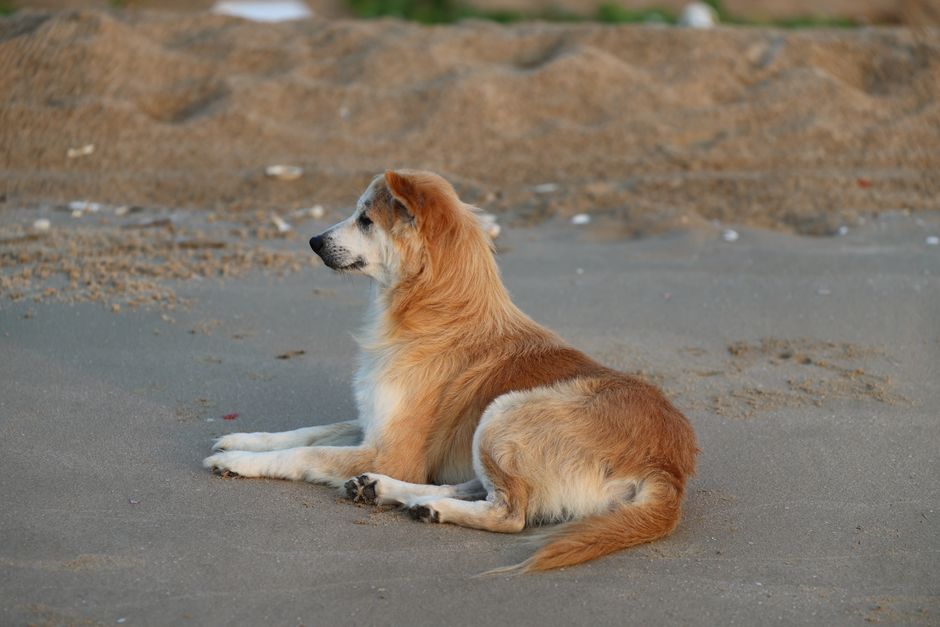
If you've ever watched a dog turn its head away from another dog at a park, or lick its lips while nothing is cooking, you've seen a calming signal. These are small, almost polite gestures dogs use to defuse tension in themselves or in whoever they're interacting with. They're easy to miss because they're quick and quiet, but once you know what to look for, they show up constantly in everyday life.
What Calming Signals Actually Do
Calming signals serve two jobs at once. First, they help a dog self-soothe during a mildly stressful moment, similar to how a person might take a slow breath before a difficult conversation. Second, in social situations they communicate "I'm not a threat" or "let's lower the intensity here" to another dog or a person. Dogs use them during greetings, vet visits, training sessions, and even quiet moments at home when something feels slightly off.
Because these signals are a dog's way of managing stress before it builds, noticing them gives you an early warning system. A dog offering several calming signals in a row is telling you the situation feels like more than they want to handle right now.
The Most Common Calming Signals
Lip Licking and Yawning
A quick tongue flick across the nose or lips, with no food nearby, is one of the most frequent calming signals. Yawning outside of tiredness works similarly — it often shows up right before or during a mildly stressful interaction, such as a nail trim or an unfamiliar person leaning in for a greeting.
Turning Away or Averting the Gaze
A dog that turns its head, or even its whole body, away from a person or another dog is often trying to lower the intensity of a direct approach. This is different from ignoring; it's an active attempt to signal "let's not escalate this."
Slow Blinking and Soft Eyes
Slow, deliberate blinking paired with a relaxed facial posture tends to communicate calm intent, both to other dogs and sometimes toward people. It's a useful one for owners to mirror back gently during calm bonding moments.
Sniffing the Ground
Sudden, intense ground-sniffing when nothing actually smells interesting is a classic calming signal, often used to create a small pause in a tense social moment.
Calming Signals at a Glance
| Signal | Common Trigger | Owner Response |
|---|---|---|
| Lip licking | Unfamiliar handling, mild stress | Slow down the interaction |
| Yawning (not tired) | Overstimulation or anticipation | Offer a short break |
| Turning head away | Direct approach from person or dog | Stop approaching, let the dog reset |
| Sudden ground sniffing | Tense social moment | Allow the pause, don't rush it |
| Slow blink | General calm-seeking | Respond with soft, slow movements |
How to Respond When You See One
- Pause whatever you're doing — approaching, handling, or continuing a training repetition.
- Give the dog a few seconds of space without immediately removing them from the situation entirely, unless signals continue to stack up.
- Watch for a second or third signal. One calming signal alone may mean little; several in a row is a clearer message.
- If signals continue, increase distance from whatever is triggering them, or end the session calmly.
This stepwise approach pairs well with a broader understanding of dog body language generally, since calming signals are really a specific, polite subset of the full body-language picture.
Why This Builds Trust
Dogs that are consistently listened to when they offer a calming signal learn that they don't need to escalate to be heard. This is one of the quieter but most important ways you can go about building trust with your dog. Missed calming signals, repeated often enough, tend to push dogs toward more obvious stress displays, which is covered further in our guide to recognizing early stress signals.
Common Mistakes
- Mistaking yawning for boredom or sleepiness only. Context matters; a yawn during an exciting or tense moment is rarely about being tired.
- Pushing through a calming signal to "finish" a greeting or photo. This teaches the dog that polite signals don't work, which can lead to more forceful signals later.
- Assuming ground sniffing is always about scent. In social settings, sudden intense sniffing is frequently about managing stress, not finding a smell.
- Reading a single signal as a definitive stress alarm. One lip lick in an otherwise relaxed dog may mean very little; it's the pattern that counts.
- Confusing calming signals with disobedience. A dog that turns away during a cue isn't necessarily refusing it; it may be signaling discomfort worth investigating.
Frequently Asked Questions
Are calming signals the same in every dog?
The general categories are widely shared across dogs, but intensity and frequency vary by individual temperament and past experience. Some dogs offer calming signals often; others rarely show them until stress is already building.
Can I use calming signals myself around my dog?
Yes. Slow blinking, turning your body slightly away, and avoiding direct, prolonged eye contact can help a nervous dog feel less pressured, especially during greetings.
Is it a problem if my dog shows calming signals during training?
It's worth noting, not panicking over. It often means the session is a bit too long, too fast, or too close to something uncomfortable. Adjust and watch whether the signals ease up.
Should I intervene every single time I see one?
Not necessarily every time, but you should always notice. If a dog offers a calming signal and the situation resolves on its own, that's fine. If signals repeat or stack, that's your cue to step in.
Sources
- ASPCA — materials describing canine stress signals and recommended owner responses.
- Fear Free Pets — guidance for recognizing and responding to subtle stress cues in low-stress handling.
- American Veterinary Society of Animal Behavior (AVSAB) — position statements on reading and respecting canine communication signals.
- International Association of Animal Behavior Consultants (IAABC) — educational resources on canine body language for owners and professionals.