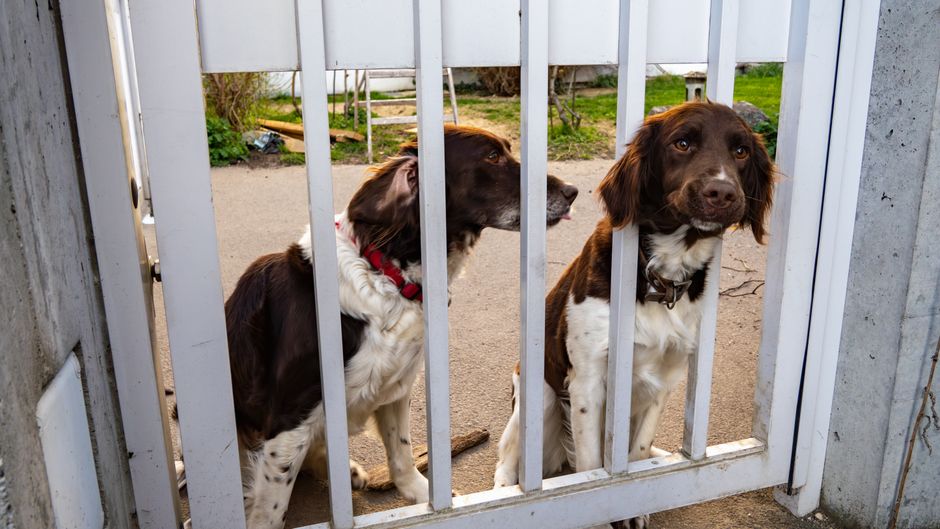
Living with multiple dogs is often easier in some ways — they can keep each other company and entertained — and harder in others, since resources, attention, and training time all have to be shared. Many of the frictions that show up in multi-dog homes aren't really about the dogs disliking each other; they're about unclear routines around food, toys, space, and one-on-one time. A few structural habits go a long way toward a calmer household.
Why Multi-Dog Households Need Extra Structure
With one dog, training and attention happen by default — there's no one else competing for it. With two or more, it's easy for a louder, bolder, or more food-motivated dog to get the lion's share of training reps, treats, and affection, while a quieter dog gets overlooked. Over time, that imbalance can show up as behavior problems in the dog who's getting less structured guidance, not because that dog is harder to train, but because they're getting fewer chances to learn.
Giving Each Dog Individual Training Time
- Set aside short, separate training sessions for each dog, even five to ten minutes, with the other dog resting elsewhere.
- Rotate which dog gets first access to new skills or games, rather than always starting with the same one.
- Use each dog's name clearly during cues, so commands aren't ambiguous about who should respond.
- Take each dog on solo outings occasionally, even short ones, so they get full attention without competition.
- Track progress separately — one dog mastering a skill doesn't mean the other has.
Managing Resources
| Resource | Practical strategy |
|---|---|
| Food and treats | Feed in separate bowls, ideally with some distance or a barrier, especially at first |
| Toys and chews | Provide enough for every dog plus extras, and supervise high-value chews closely |
| Resting spots and beds | Offer multiple comfortable spots so no dog has to compete for the only good one |
| Owner attention | Build in deliberate one-on-one time rather than assuming it balances out naturally |
| Doorways and narrow spaces | Teach a wait or release cue so dogs aren't body-slamming through tight spots together |
Building a Fair Routine
- Map out a rough daily schedule: feeding times, walks, training sessions, and rest periods for each dog.
- Build in at least one dedicated one-on-one block per dog, even if brief.
- Rotate who goes first for walks, treats, or greetings at the door, rather than always defaulting to the same order.
- Watch for patterns where one dog consistently defers or avoids the other, and address that directly rather than assuming it will resolve on its own.
- Reassess the routine every few weeks as the dogs' needs and relationship shift.
Handling Attention-Seeking and Jealousy-Like Behavior
Pushing between you and another dog, barking during the other dog's training session, or crowding in during petting are common in multi-dog homes. Rather than scolding, it often works better to reward calm waiting — step away from the behavior, and reward the dog the instant they back off or settle. Teaching a reliable "go to your spot" cue for each dog gives everyone a clear job during moments when only one dog can have your full attention.
Introducing a New Dog Into an Existing Group
Adding a new dog to a household that already has one or more dogs calls for the same careful, neutral-territory process described in our guide on introducing dogs to each other safely, plus extra attention to the existing dog's resources and routine so they don't feel suddenly displaced. Watching how the dogs interact during this adjustment period — covered in our article on reading how your dog interacts with other dogs — helps you catch friction early.
Multi-Dog Homes With Children
Households with both multiple dogs and children benefit from extra-clear rules, since a child moving between two dogs can accidentally trigger resource guarding or crowding. Our guide on teaching safe interactions between dogs and children covers supervision habits that are especially important when more than one dog is involved.
Common Mistakes
- Training only the easier or more responsive dog. The quieter dog often needs individual reps just as much, if not more.
- Feeding dogs too close together without supervision. This is one of the most common sources of tension in multi-dog homes.
- Assuming the dogs will "sort out" attention on their own. Deliberate structure prevents a lot of friction before it starts.
- Only ever walking the dogs together. Occasional solo time matters for both training and the relationship with each dog.
- Ignoring one dog consistently avoiding or deferring to the other. This pattern is worth addressing directly, not overlooking.
- Adding a new dog without a gradual introduction process. Skipping this step raises the odds of ongoing tension.
Frequently Asked Questions
Should I train both dogs together or separately?
Both have value. Separate sessions build individual skills without competition; joint sessions build the ability to stay calm and responsive with distractions present. Most households benefit from a mix of each.
Is it normal for one dog to seem more "dominant" than the other?
Dogs often do settle into different roles around specific resources, but framing this as fixed "dominance" oversimplifies things. Focus on managing specific situations — like feeding or doorways — rather than trying to enforce a hierarchy.
How do I stop my dogs from fighting over toys?
Provide multiple similar toys, supervise high-value items closely, and separate dogs for especially valuable chews until you're confident resource guarding isn't an issue. Persistent guarding between housemates may need a trainer's input.
Can three or more dogs really get individual attention?
Yes, though it takes more deliberate scheduling. Short, staggered one-on-one sessions throughout the week work better than trying to split attention evenly in every single moment.
Sources
- American Kennel Club (AKC) — guidance on managing multiple dogs and individual training needs.
- ASPCA — resources on resource guarding and reducing tension between household dogs.
- Humane World for Animals — guidance on introducing and managing multi-pet households.
- Certification Council for Professional Dog Trainers (CCPDT) — reward-based standards relevant to multi-dog management.