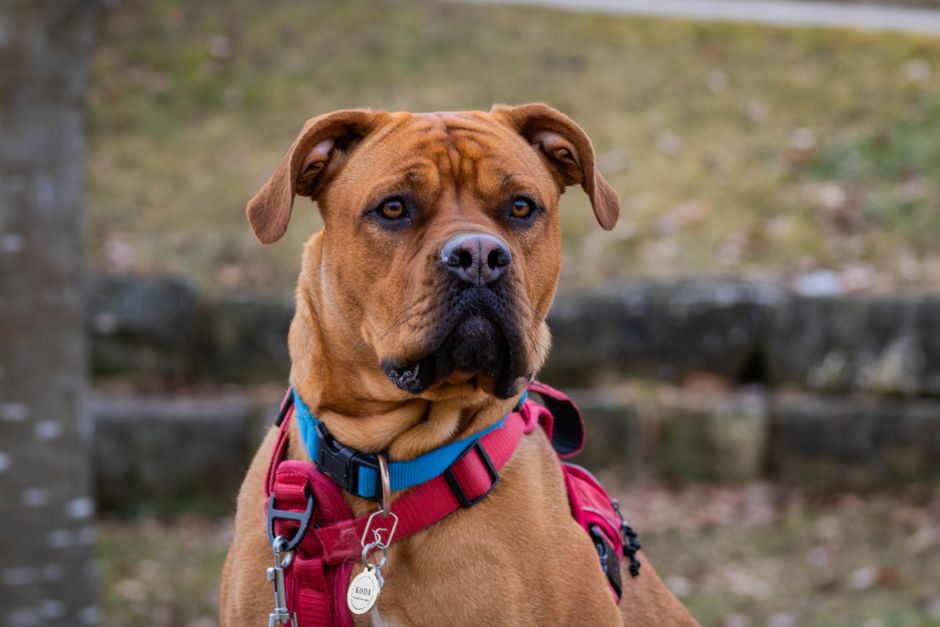
Walk into any pet store and the wall of leashes, collars, harnesses, and gadgets can be overwhelming, especially for a first-time owner. Most of these tools aren't competing products trying to do the same job; they're built for different purposes, and picking the wrong one for your situation can make training harder than it needs to be. This guide compares the most common options in plain, neutral terms.
Flat Collars
A standard flat collar is useful for holding ID tags and can work fine for a dog that already walks politely on leash. It's not usually the best primary tool for leash training a dog that pulls, since constant pressure on the neck can be uncomfortable and, over time, has been linked to strain on the throat for dogs that pull hard and often. Many trainers recommend keeping leash walking separate from a collar used mainly for identification.
Front-Clip and Back-Clip Harnesses
Harnesses distribute pressure across the chest and shoulders rather than the neck, which makes them a common choice for dogs still learning not to pull. A front-clip harness, with the leash attachment on the chest, gently redirects a pulling dog back toward the handler, which many owners find easier to manage during the early stages described in our leash training basics guide. A back-clip harness is comfortable and simple but offers less built-in correction for pulling, making it a better fit for dogs that already walk fairly calmly.
Head Halters
A head halter loops around the muzzle, giving a handler more directional control over where a dog's head, and therefore attention, is pointed. It can be useful for larger, strong dogs with a significant pulling habit, but it typically requires a gradual, positive introduction since many dogs initially resist anything near their face. It is not a muzzle and does not prevent a dog from opening its mouth.
Long-Line Leashes
A long line, often fifteen to thirty feet, gives a dog more freedom to move while still providing a physical safety net, which makes it one of the most useful tools for building recall around real distractions, discussed in depth in our building reliable recall guide. It's less practical for crowded sidewalks but valuable in open fields or parks.
Clickers and Verbal Markers
Unlike the equipment above, a clicker isn't about physical control at all. It's a communication tool that marks the exact instant a dog does something right, which sharpens timing during the learning phase of a new skill. Our full explanation in clicker training explained covers how to introduce and eventually phase one out as behaviors become reliable.
Comparing the Options at a Glance
| Tool | Primary purpose | Best fit |
|---|---|---|
| Flat collar | ID tags, light leash use | Dogs that already walk calmly |
| Front-clip harness | Reducing pulling, gentle redirection | Dogs actively learning loose-leash walking |
| Back-clip harness | Comfortable everyday walking | Dogs with minimal pulling |
| Head halter | Directional control for strong dogs | Larger dogs with significant pulling, introduced gradually |
| Long-line leash | Distance practice with a safety net | Recall training in open spaces |
| Clicker | Precise marking of new behavior | Teaching and shaping new skills |
Matching Equipment to Your Dog, Not the Trend
It's tempting to buy whatever tool a friend or online video recommends, but the right choice depends heavily on your individual dog's size, strength, and current habits. A small dog that already walks politely may never need anything beyond a basic harness, while a large, enthusiastic puller might benefit from a front-clip harness or head halter during the active training phase described in our positive reinforcement basics guide. None of these tools replace training itself; they support it.
Introducing New Equipment Without Stress
Any new piece of equipment, especially a harness or head halter, should be introduced gradually and paired with treats and praise rather than strapped on all at once. Letting a dog sniff and investigate new gear, then rewarding calm acceptance of it being put on, prevents the kind of resistance that can make a genuinely helpful tool feel like a fight. This same gradual, reward-based mindset runs through the entire Foundations & Basic Commands category.
Common Mistakes
- Choosing equipment based on appearance alone. Fit and function matter more than color or style for training purposes.
- Using a retractable leash during active training. The constant tension makes it hard for a dog to learn what a loose leash feels like.
- Strapping on new gear without any introduction. This can create unnecessary resistance to otherwise useful equipment.
- Assuming one tool fixes a behavior on its own. Equipment supports training; it doesn't replace it.
- Using a head halter without a gradual introduction. Many dogs need time to accept something near their face.
- Sticking with an ill-fitting harness. A poor fit can cause chafing or give a dog room to back out of it.
Frequently Asked Questions
Is a harness always better than a collar?
For leash training and walking, most dogs do better in a harness, since it avoids pressure on the neck. A collar still has a place for holding ID tags and in some everyday situations.
Do I need a clicker to train my dog effectively?
No. A clicker is a helpful tool for precise timing, but a verbal marker or even careful use of praise and treats can work well without one.
What's the difference between a head halter and a muzzle?
A head halter guides direction and does not restrict a dog's mouth from opening. A muzzle is a separate tool entirely, used to prevent biting or eating something harmful.
How do I know if a harness fits correctly?
You should be able to fit two fingers snugly under any strap, with no rubbing at the armpits and no way for the dog to back out of it.
Sources
- American Kennel Club (AKC) — overview of common training equipment and fitting guidance.
- ASPCA — resources on choosing humane, comfortable walking equipment.
- Fear Free Pets — guidance on introducing new equipment without creating stress.
- Certification Council for Professional Dog Trainers (CCPDT) — professional perspective on matching tools to training goals.