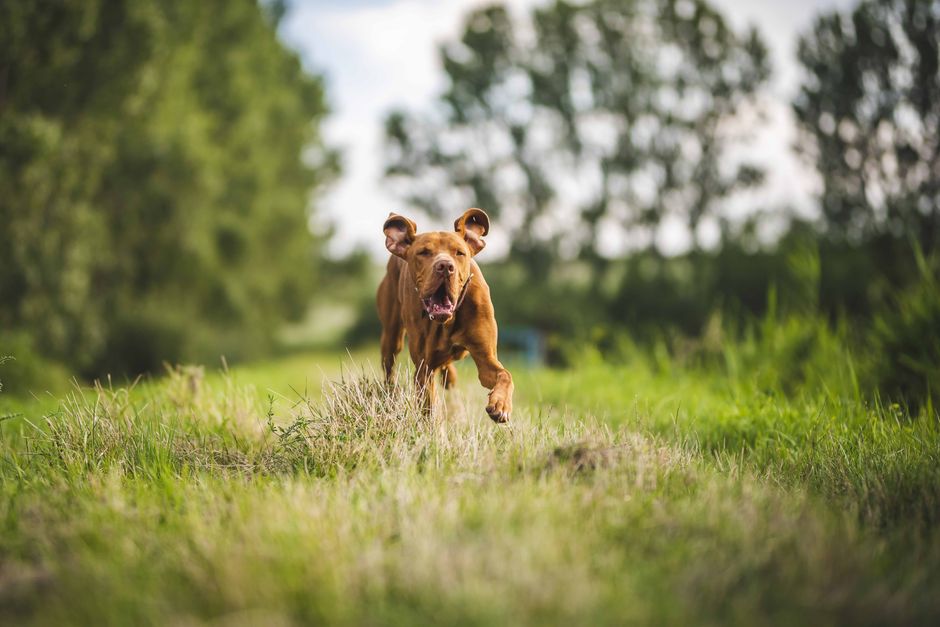
Of all the commands in a dog's basic education, recall carries the most real-world weight. A dog that reliably comes when called is safer around open doors, busy streets, and off-leash areas, and far easier to manage in everyday situations. Unfortunately, it's also one of the commands most likely to be only "sort of" trained, working fine at home but failing exactly when it matters most.
Start With Name Recognition
Before recall itself, a dog needs a strong, positive association with their own name. Say your dog's name in a happy tone, and the instant they look toward you, mark and reward. Repeat this frequently throughout the day, in different rooms, so the name consistently predicts something good rather than becoming background noise. This step is easy to skip past, but a dog that doesn't reliably orient to their name will struggle with recall later, since the name is usually the first half of the full cue.
Why Many Recalls Quietly Fail
The most common reason recall breaks down isn't a lack of training, it's a history of the word being paired with something the dog would rather avoid: ending a fun play session, going into a bath, or being put in the crate for the night covered in our crate training guide. If "come" sometimes means something unpleasant is about to happen, dogs understandably start to hesitate. Keeping the cue clean, always followed by something rewarding, is one of the single biggest factors in long-term reliability.
Building Recall in Layers
| Stage | Setting | Goal |
|---|---|---|
| 1 | Hallway or small room, no distractions | Immediate, enthusiastic response to the cue |
| 2 | Fenced yard, mild distractions | Reliable response with more space and some competing smells |
| 3 | Long-line leash in a park or open field | Response around real distractions, with a physical safety net still attached |
| 4 | Off-leash in a secure area, only once stage 3 is solid | Full reliability without a line attached |
Skipping straight to stage 4 is the single most common reason recall training fails in open spaces. A long-line leash, typically fifteen to thirty feet, lets you practice at real distance without risking a dog bolting toward a distraction with no way to intervene.
Making the Reward Worth Coming Back For
Whatever your dog is doing when you call them, from your dog's perspective, needs to be less interesting than what they get for coming back. This often means using your highest-value rewards, like real chicken or a favorite toy, specifically for recall practice rather than everyday training, and saving a jackpot-style reward, several treats in a row or an extended play session, for recalls away from serious distractions. The reward principles behind this come straight from our positive reinforcement basics article.
Practicing the "Recall Game"
- With two people and a long hallway or yard, each person calls the dog back and forth, rewarding every arrival.
- Gradually increase the distance between the two people as the dog's enthusiasm stays high.
- Occasionally call from a crouched, excited position to make coming back feel like the most fun option in the room.
- Keep sessions short, five minutes or less, so the dog's energy and focus stay high throughout.
Our guide on structuring a training session covers more on why short, high-energy sessions tend to outperform long drilling sessions, especially for a high-arousal skill like recall.
What to Do If Recall Breaks Down in Public
If your dog ignores a recall cue in a real situation, resist the urge to repeat the word over and over, which teaches the dog that the first few calls don't count. Instead, try moving closer, using an excited tone or movement to spark curiosity, or using a secondary cue your dog associates strongly with a reward. Afterward, go back to easier practice in that same environment rather than assuming the dog is simply being defiant.
Common Mistakes
- Only calling a dog to end something fun. This quietly teaches dogs to dread the recall cue.
- Practicing recall for the first time off-leash. Without a long line, there's no way to prevent a failed attempt from rehearsing the wrong outcome.
- Repeating the cue multiple times in a row. This trains dogs that the first one or two calls are optional.
- Punishing a dog after a slow or reluctant return. This makes the next recall even less appealing.
- Using low-value treats for high-distraction practice. The reward needs to compete with whatever the dog is leaving behind.
- Assuming recall transfers automatically between locations. Each new environment needs its own round of practice.
Frequently Asked Questions
How long does it take to build a reliable recall?
Basic recall in low-distraction settings often develops within a couple of weeks, but full reliability around real distractions commonly takes several months of layered practice.
Should I ever let my dog off-leash before recall is solid?
Only in a securely fenced area. In open or unfenced spaces, a long-line leash gives you a safety net while still allowing real distance practice.
My dog comes at home but ignores me at the dog park. Why?
The dog park likely represents a much higher distraction level than your dog has practiced against yet. Scale back to a long-line leash and rebuild the skill at that distraction level specifically.
Is it okay to use a different word than "come"?
Yes, any consistent word works as long as it's used only for this purpose and always followed by a reward.
Sources
- American Kennel Club (AKC) — guidance on building and maintaining reliable recall.
- ASPCA — safety-focused resources on off-leash training and long-line practice.
- American Veterinary Society of Animal Behavior (AVSAB) — reward-based recommendations for recall and other foundational cues.
- Certification Council for Professional Dog Trainers (CCPDT) — professional standards on building reliability through distraction and distance training.