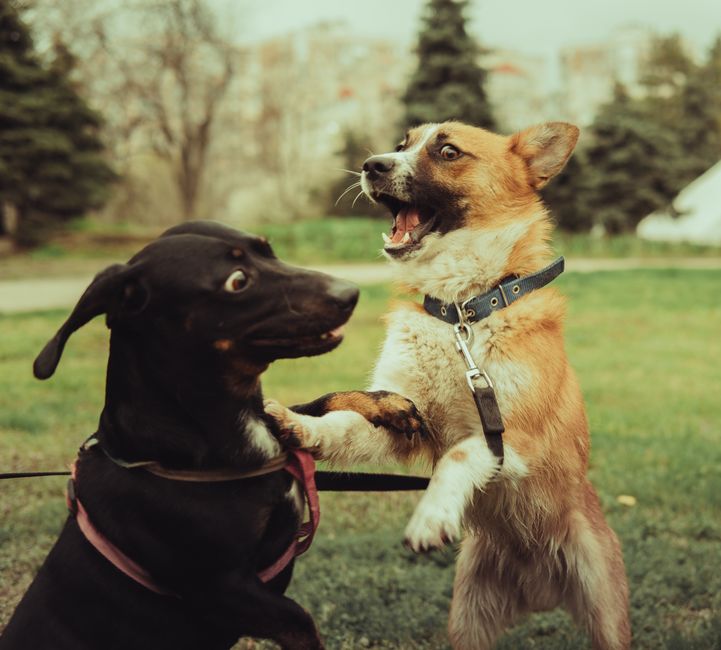
A dog park can be a wonderful way for a social, well-exercised dog to burn energy and interact with others off leash. It can also be an unpredictable mix of strangers, strange dogs, and uneven supervision. Neither extreme view — "dog parks are always great" or "dog parks are always dangerous" — is especially useful. What actually matters is whether your dog is a good match for that setting on that day, and whether you're paying close enough attention to step in before a small problem becomes a big one.
Before You Go: Is the Dog Park Right for Your Dog?
Dog parks work best for dogs who are already comfortable meeting unfamiliar dogs, have a solid recall, and don't guard toys or food around other dogs. A dog who's still building those skills may do better with the structured, one-on-one approach described in our guide to introducing dogs to each other safely, or with calmer settings like a friend's fenced yard, before tackling an open dog park with a dozen strangers.
Reading Group Dynamics
Before unclipping the leash, spend a minute or two watching the dogs already inside. Look at the overall energy level, whether play looks mutual and bouncy or one-sided and tense, and whether any dog seems to be cornering or ganging up on another. A park full of calm, loose-bodied dogs taking turns chasing each other is a very different environment from one where several dogs are stiff, staring, or clustering around a single dog who's trying to get away.
| Green flags | Red flags |
|---|---|
| Loose, bouncy movement; play bows; frequent role-switching in chase games | Stiff bodies, hard stares, raised hackles across multiple dogs |
| Dogs take breaks and check in with their owners | Non-stop chasing with no pauses or self-interruptions |
| Mixed group sizes with dogs moving in and out of play | One dog being repeatedly chased, pinned, or unable to escape a group |
| Owners actively watching their dogs | Owners absorbed in phones, not tracking their own dog's behavior |
A Simple Entry Routine
- Pause at the gate and observe the dogs already inside for a minute or two.
- Keep your dog on leash just inside the entry area rather than releasing them the instant the gate opens.
- Let one or two dogs approach and sniff while still leashed, watching body language closely.
- Unclip the leash only once the initial greeting looks calm and mutual.
- Stay mobile and keep checking in with your dog throughout the visit rather than parking on a bench.
- Call your dog over periodically for a quick check-in and treat, so recall stays reliable even during exciting play.
Owner Etiquette Basics
- Clean up after your dog every time, without exception.
- Leave toys and food at home, or keep them put away — these are common triggers for conflict between unfamiliar dogs.
- Keep an eye on your own dog rather than relying on other owners to manage the group.
- Don't bring a dog who is unwell, in heat, or under the size or age minimums many parks set.
- Respect separate small-dog areas where they exist, even if your dog "does fine with big dogs."
- Step in calmly to call your dog away at the first sign of tension — don't wait to see if it resolves on its own.
When to Leave
Leaving early is a normal, sensible outcome, not a failure. Consider heading out if your dog seems overwhelmed, overly aroused, singled out by other dogs, or if the overall group energy shifts toward tension. The same applies if another owner's dog is clearly not under control. There's no prize for staying the full hour if the environment has turned unpredictable. For a deeper look at distinguishing normal rough play from a situation turning sour, see our guide on reading how your dog interacts with other dogs.
Dogs That May Need a Different Approach
Dogs with an unknown history, limited early socialization, or a pattern of reactivity around other dogs often do better easing in gradually rather than starting at a crowded off-leash park. Our article on socializing a rescue dog covers a slower framework that builds skills before a dog park visit makes sense, if it ever does for that particular dog. There's no requirement that every dog eventually "graduate" to dog parks — plenty of dogs live full, happy lives without them.
Common Mistakes
- Releasing a dog off leash immediately at the gate. A brief leashed pause to observe the group lowers the odds of walking straight into tension.
- Bringing toys or treats into the main play area. These frequently spark guarding behavior among dogs who don't know each other.
- Assuming "dogs will work it out" during a tense moment. Early intervention is almost always easier than managing an escalated conflict.
- Not watching your own dog closely. Phones and conversations with other owners are easy distractions from the thing you're actually there to supervise.
- Staying too long out of habit. A visit that starts calm can shift as new dogs arrive; reassess throughout, not just at the start.
- Bringing a dog who isn't ready yet. See our note above on dogs who may do better with a gradual approach first.
Frequently Asked Questions
How do I know if my dog is actually enjoying the dog park, not just tolerating it?
Look for a loose body, voluntary return to play after breaks, and relaxed interest in other dogs. A dog who hides near the fence, pants heavily without exertion, or tries to leave is telling you something important.
Is it safe to bring puppies to a dog park?
Many trainers and veterinary behavior groups suggest waiting until a puppy is fully vaccinated and has had some positive, controlled experience with calm adult dogs first, since open dog parks can be overwhelming or risky for very young puppies.
What should I do if a fight breaks out?
Avoid reaching into a tangle of dogs with your hands. Loud noise, a sudden distraction like a sprayed hose, or physically blocking dogs from each other with a barrier are generally safer options. Separate the dogs calmly once possible and leave the park.
My dog is fine one-on-one but struggles in groups. What does that mean?
Some dogs genuinely prefer smaller, calmer settings and never love large group play, which is completely normal. One-on-one meetups, covered in our guide to introducing dogs to each other safely, can be a better long-term fit.
Sources
- American Veterinary Society of Animal Behavior (AVSAB) — guidance on recognizing stress and conflict signals in group dog settings.
- American Kennel Club (AKC) — general dog park safety and etiquette recommendations.
- Humane World for Animals — guidance on evaluating whether a dog is a good candidate for off-leash group play.
- ASPCA — resources on canine body language and intervening safely during tense interactions.