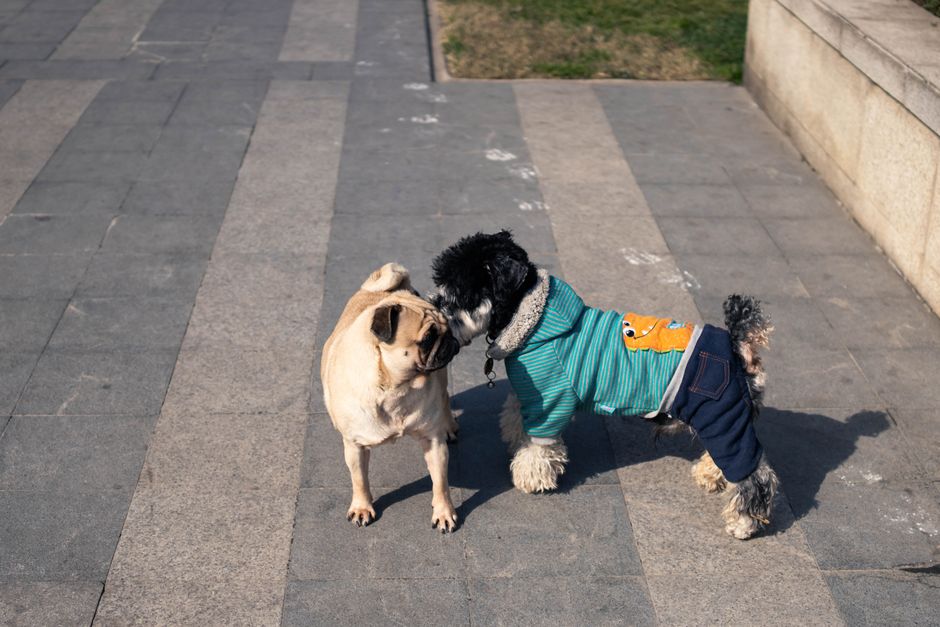
Whether you're fostering, dog-sitting, or thinking about adding a second dog to your home, the first few minutes two dogs spend together often set the tone for everything that follows. A rushed or poorly managed introduction can create tension that lingers for weeks. A calm, well-paced one can turn into a lifelong friendship. This guide walks through a neutral-territory method many trainers and shelters recommend, along with how to read the greeting as it unfolds.
Why First Impressions Matter
Dogs form impressions of each other quickly, and those early impressions influence how relaxed or guarded they are in future encounters. A first meeting that happens on one dog's home turf, in a cramped space, or on tight leashes tends to add pressure that has nothing to do with the dogs' actual personalities. Setting up the right conditions removes a lot of that unnecessary pressure before the dogs even get close to one another.
Before You Start: Setting Up for Success
A few preparations make a real difference:
- Choose neutral territory — a park, quiet street, or yard neither dog considers "theirs."
- Bring two handlers if possible, one per dog, so neither person is juggling a leash and trying to read two dogs at once.
- Use regular flat leashes with some slack, not tight or retractable leashes.
- Remove high-value items beforehand — toys, chews, and food bowls — since these can spark guarding behavior during a first meeting.
- Pick a time when both dogs have had a chance to relieve themselves and burn off excess energy.
- Have treats on hand for calm, friendly behavior from either dog.
The Neutral-Territory Method, Step by Step
- Walk both dogs in the same general area, but far enough apart that neither strains toward the other or shows stiff, fixed staring.
- Gradually close the distance over several minutes, watching both dogs' body language the whole time.
- Allow a brief, three-to-five-second sniff greeting, side-by-side if possible rather than head-on.
- Call the dogs apart calmly after that first sniff, rather than letting the greeting run on indefinitely.
- If both dogs seem loose and relaxed, allow another short greeting, slightly longer than the first.
- Try walking the dogs side by side, a few feet apart, to build comfort through shared activity rather than face-to-face pressure.
- If things continue to go well, allow some leash-free time in a securely fenced, neutral space, supervised closely.
Keeping sessions short and ending on a calm note — rather than waiting for a sign of trouble — tends to work better than one long, uninterrupted encounter. For more on what calm versus tense body language looks like during this process, see our guide on reading how your dog interacts with other dogs.
Reading the Greeting as It Happens
Loose, wiggly bodies, relaxed tails held at a natural height, play bows, and brief mutual sniffing are good signs. Stiff, frozen posture, prolonged direct staring, raised hackles, a tucked tail paired with a stiff body, or growling paired with a hard stare are reasons to add distance immediately and redirect both dogs' attention. One dog hiding behind their handler or trying to move away should also be respected — don't encourage them to "just say hi" if they're clearly opting out.
Bringing Dogs Home Together
A good park meeting doesn't guarantee a smooth transition home. Once both dogs arrive, keep the first hours structured: supervise closely, manage access to toys, beds, and food bowls separately at first, and give each dog their own space to retreat to. If you're planning to keep both dogs long-term, our article on training tips for multi-dog households covers how to manage attention, resources, and individual training time once the introduction phase is behind you.
When to Pause or Stop the Introduction
Not every pairing clicks on the first try, and that's normal. Pause the introduction if you see repeated stiff staring, growling that doesn't ease with distance, snapping, or one dog consistently trying to escape the interaction. A pause doesn't mean failure — many dogs need several short, calm sessions over days or weeks before they're ready to be close. If tension continues across multiple calm attempts, consider getting help from a certified trainer rather than continuing to push the pairing on your own, especially with dogs whose history is unknown. Our guide on socializing a rescue dog covers a slower pace that works well for dogs with an uncertain past.
Common Mistakes
- Introducing dogs inside a home or yard one dog already considers their territory. This adds defensive pressure that has nothing to do with how the dogs actually feel about each other.
- Letting leashes go tight. Tension on the leash telegraphs stress to the dog and can make a calm dog act more guarded than they otherwise would.
- Allowing a head-on, face-to-face approach. Many dogs find this more confrontational than a side or curved approach.
- Leaving toys or chews out during the first meeting. These are common triggers for resource guarding between unfamiliar dogs.
- Letting the first greeting run too long. Extended face time without a break can escalate excitement into something harder to settle.
- Assuming one good meeting means the dogs are instantly best friends. Keep supervising closely for days or weeks before relaxing management.
Frequently Asked Questions
How long should the first meeting last?
Short is better. A handful of brief greetings over fifteen to thirty minutes tells you more, and is safer, than one long, continuous session.
Should puppies and adult dogs be introduced differently?
The same neutral-territory approach works, but adult dogs may need more breaks from a bouncy puppy's energy. Watch the adult dog for signs they need space, and separate the dogs for rest periods throughout the day.
What if the dogs ignore each other completely?
That's usually fine. Dogs don't need to be instantly enthusiastic about each other — calm indifference is a perfectly workable starting point and often settles into comfort over time.
Is it normal for there to be some growling or stiffness at first?
Brief, mild stiffness that eases with distance is common and not necessarily a red flag. Growling that continues, escalates, or is paired with a hard stare and no give is more concerning and is a reason to pause and add distance.
Sources
- American Society for the Prevention of Cruelty to Animals (ASPCA) — guidance on introducing dogs and reading canine body language during first meetings.
- Humane World for Animals — recommendations on neutral-territory introductions when adding a new dog to a household.
- American Kennel Club (AKC) — general advice on multi-dog introductions and management during the adjustment period.
- International Association of Animal Behavior Consultants (IAABC) — perspective on recognizing early conflict signals between dogs.